


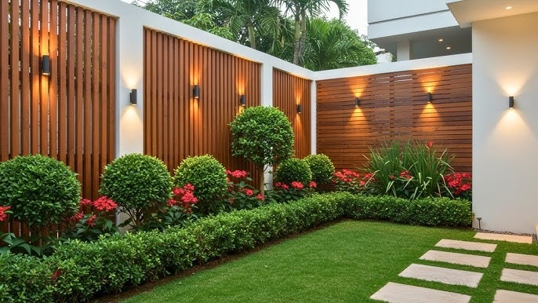
The best privacy fence ideas include board-on-board, horizontal slat, shadowbox, lattice-top, and mixed-material designs built from wood, vinyl, or metal. Each style offers a different look, a different level of privacy, and a different price point. The right choice depends on your yard, your home's style, and how much maintenance you want to take on.
This guide walks through the most popular privacy fence styles, the best materials for each one, budget-friendly options that still look great, and creative alternatives for homeowners who want privacy without a traditional fence. Whether you are starting from scratch or replacing an old fence, these ideas will help you find the right fit.
The Most Popular Privacy Fence Ideas in 2026
Privacy fences have come a long way from plain wooden panels. According to Greenhill Fencing, one of the biggest trends in 2026 is mixed-material fencing, where homeowners blend different textures and materials for a custom look. Horizontal designs, lattice accents, and decorative post caps are all showing up on more properties every year.
A survey by Top Rail Fences found that 46% of respondents prefer a privacy fence for security, and 66% say cost-effectiveness is the top priority when choosing one. That means the best ideas balance good looks with a price that makes sense.
Board-on-Board Privacy Fence
A board-on-board fence uses overlapping vertical boards on alternating sides of the rail. This means there are no gaps between the boards from any angle, giving you complete privacy. It is one of the most popular privacy fence styles because it looks finished from both sides, which is a nice gesture toward your neighbors.
Board-on-board works best with wood fencing materials like cedar, pine, or redwood. According to Index Fence, this timeless style delivers total privacy and strong wind protection, making it a great choice for open backyards. It uses about 15% more lumber than a standard flat-panel fence because the boards overlap, but the upgraded look is worth it for most homeowners.
Horizontal Slat Privacy Fence
Horizontal fences run the boards side to side instead of up and down. This creates a clean, modern look that makes smaller yards appear wider. According to Select Fence Group, horizontal slats have become extremely popular for residential fencing because they complement contemporary home styles while still providing full privacy.
Keep in mind that horizontal fences cost more than vertical ones. According to Ergeon's analysis of over 32,000 wood fence installs, horizontal board styles run about 82% more per foot than a basic vertical nail-up design. The extra cost comes from the need for more posts (horizontal boards need support every four to six feet instead of every eight feet) and the added labor involved in leveling each board.
Shadowbox Privacy Fence
A shadowbox fence alternates boards on the front and back of the rails with a small gap between them. From straight on, it looks solid. From an angle, light filters through. This design gives you good privacy from the neighbors while still letting air flow through the fence, which helps in windy areas because the wind passes through instead of pushing against a solid wall.
Shadowbox fences look the same on both sides, which makes them a great choice when your fence faces a neighbor's yard or a public sidewalk. They work well in cedar, pine, or composite materials.
Lattice-Top Privacy Fence
A lattice-top fence combines a solid lower section with a decorative lattice panel across the top. The solid portion gives you privacy where you need it most, and the lattice adds height and visual interest without making the fence feel like a wall. According to Perimtec, pairing lattice tops with vinyl panels has become popular because it creates a sleek, weather-resistant design that softens the look of a tall fence.
Lattice tops also make excellent support for climbing plants like jasmine, clematis, or ivy. According to Terri Steffes, the trend of integrating living elements like planters and climbing plants into fence designs has grown 40% in popularity since 2023.
Mixed-Material Privacy Fence
Mixed-material fences combine two or more materials, like wood panels in a steel frame, or horizontal cedar boards between metal posts. This trend is growing fast. According to Greenhill Fencing, homeowners are moving away from single-material fences and blending textures for a more custom, upscale appearance.
Common combinations include wood with metal, vinyl with stone columns, and composite boards in aluminum frames. Mixed-material fences work especially well when you want different levels of privacy in different areas, like aluminum in the front yard for style and solid panels in the backyard for seclusion.
Which Type of Privacy Fence Is Best?
The best type of privacy fence depends on your goals, your budget, and how much upkeep you want to do. For a natural, classic look at a moderate cost, wood is hard to beat. For zero maintenance and long life, vinyl is the better choice. For a modern, sleek look with maximum durability, metal or composite panels are worth the investment.
According to the National Association of Realtors' Remodeling Impact Report, 35% of homeowners say functionality is the most important factor in a remodeling project. That means the best fence for your property is the one that solves your specific problem, whether that is blocking a neighbor's view, keeping kids safe, or reducing road noise.
| Privacy Fence Style | Best Material | Privacy Level | Relative Cost | Best For |
|---|---|---|---|---|
| Board-on-Board | Cedar, Pine | Full | Moderate | Backyards, neighbor-facing sides |
| Horizontal Slat | Cedar, Composite | Full | Higher | Modern homes, small yards |
| Shadowbox | Cedar, Pine, Composite | Moderate to High | Moderate | Windy areas, shared borders |
| Lattice-Top | Vinyl, Wood | Moderate | Moderate | Gardens, decorative yards |
| Mixed-Material | Wood + Metal, Vinyl + Stone | Varies | Higher | Custom looks, front yards |
| Solid Flat Panel | Vinyl, Wood | Full | Lower | Maximum privacy on a budget |
Sources: Greenhill Fencing (2026), Index Fence, Select Fence Group, Perimtec, Ergeon (2026)
What Is the Cheapest Privacy Fence Option?
The cheapest privacy fence option is a basic pressure-treated pine fence in a flat-top or dog-ear style. According to Barrier Boss USA, pressure-treated pine costs about $10 to $20 per linear foot for materials alone. With labor, a simple pine privacy fence runs about $25 to $35 per linear foot installed.
Pine is affordable because it grows fast and is widely available. The downside is that it needs staining or sealing every two to three years to prevent rot and warping. If you skip the maintenance, a pine fence may only last 10 to 15 years. With regular fence staining, pine can last 20 years or more.
If you need privacy for even less money, adding privacy slats to an existing chain link fence is the most affordable route. Slats cost just a few dollars per linear foot and install in an afternoon.
What Is the Cheapest Material to Build a Privacy Fence Out Of?
The cheapest material to build a privacy fence out of is pressure-treated pine. Pine boards cost less per foot than cedar, redwood, vinyl, or any metal option. According to Brentwood Fence, cedar privacy fencing runs $25 to $45 per linear foot installed, while basic pine comes in significantly lower.
The catch is that cheaper materials usually cost more in the long run. According to Fixr.com, a wood fence lasts about 15 years before it needs replacement. A vinyl fence costs more upfront but lasts 25 to 35 years with no maintenance, according to NMI Fence. If you plan to stay in your home for 20 years or more, vinyl can actually be the cheaper option when you factor in staining, repairs, and eventual replacement.
Privacy Fence Ideas by Material
Wood Privacy Fence Ideas
Wood is the most versatile privacy fence material because it can be cut, shaped, stained, and painted to match any design. Popular wood privacy fence styles include board-on-board, horizontal slat, dog-ear, flat-top, and picture frame designs. Cedar is the most popular wood choice because of its natural resistance to rot and insects, its warm color, and the way it ages into a beautiful silver-gray over time.
For a modern look, stain your wood fence black or dark charcoal. For a classic look, go with a natural cedar tone or a warm honey stain. According to Perimtec, dark fence finishes with contrasting slats or geometric inserts are an emerging design trend.
Vinyl Privacy Fence Ideas
Vinyl privacy fences come in solid panels, tongue-and-groove designs, and styles that mimic the look of wood grain. White is the most common color, but vinyl also comes in tan, gray, brown, and even dark tones. According to Grand View Research, the residential segment held 63.7% of the U.S. fencing market revenue share in 2024, with homeowners increasingly choosing vinyl and composite for curb appeal and low maintenance.
Vinyl works especially well for lattice-top designs because the material holds its shape and color for decades without painting. It is also a strong choice for homeowners near busy roads because solid vinyl panels act as a sound buffer, according to Diversified Fence.
Metal Privacy Fence Ideas
Metal privacy fences are a newer trend, but they are growing fast. Corrugated metal panels, horizontal aluminum slats, and powder-coated steel screens all create a modern, industrial look. According to Barrier Boss USA, corrugated metal panels are available in black, silver, and custom finishes, and they are virtually maintenance-free.
Metal panels pair well with wood or stone posts for a mixed-material look. Ornamental steel is not typically used for full privacy because of the gaps between pickets, but it can be combined with solid panels in sections where you need both style and seclusion.
How to Block Neighbors' View Without a Fence?
You can block neighbors' view without a fence by using tall hedges, privacy screens, pergolas with curtains, trellises with climbing plants, or freestanding planter walls. According to a DeerBusters study, 19% of homeowners said a combination of fencing and landscaping is the most effective approach to privacy.
Tall evergreen hedges like privet, arborvitae, or boxwood create a living wall that blocks views year-round. They take a few years to grow in fully, but once established, they look better than any fence and last indefinitely with regular trimming. Bamboo screens are another option for fast-growing, natural privacy. A row of tall ornamental grasses can block a ground-level view within a single growing season.
Pergolas with retractable curtains or side panels work well over patios and dining areas. They define the space and give you control over how much privacy you have at any given time. Outdoor blinds, reed panels, and faux hedge panels are other quick fixes that do not require permits or permanent construction.
What Is the Alternative to a Privacy Fence?
The main alternatives to a privacy fence are living hedges, outdoor privacy screens, pergolas, trellises with vines, and retractable shade sails. Each one offers a different level of coverage and a different look.
Living hedges are the most natural-looking alternative. Arborvitae, holly, and laurel are all dense evergreens that grow tall enough to block views completely. Freestanding privacy screens made from wood, metal, or fabric work well for targeted areas like patios, hot tubs, or seating areas. Trellises covered in climbing plants like wisteria, honeysuckle, or climbing roses add beauty and privacy at the same time.
According to the DeerBusters study, 16% of homeowners said they avoided installing a tall or solid privacy fence because of potential neighbor reactions. For those homeowners, softer alternatives like hedges, planters, or pergolas create privacy without the hard boundary a fence creates.
How to Build a Fence for Cheap on a Budget?
To build a fence for cheap on a budget, start with pressure-treated pine in a simple flat-top or dog-ear style. Skip the decorative elements like lattice tops and post caps. Use standard four-by-four posts instead of oversized six-by-six posts. Choose a basic six-foot height instead of going taller.
Pre-built fence panels save money on labor because they install faster than custom board-by-board construction. According to Angi, a professional crew can finish a standard privacy fence in 20 to 30 hours using panels, compared to 40 or more hours for a custom build. Since labor is about 50% of the total cost, faster installation means real savings.
Another way to save is to fence only the areas that matter most. You do not always need to fence the entire perimeter. Fencing just the backyard or just the side that faces a busy road or a neighbor's property can cut the total cost by 30% to 50% while still giving you the privacy you need.
We always recommend getting at least two or three quotes to compare pricing in your area. A residential fence project can vary by hundreds or even thousands of dollars depending on the contractor, the season, and the condition of your yard.
Frequently Asked Questions
What Is the Cheapest Way to Make a Fence Private?
The cheapest way to make a fence private is to add privacy slats, mesh screens, or bamboo rolls to an existing chain link or open fence. These add-ons cost just a few dollars per linear foot and block most of the view without replacing the fence. Reed fencing rolls and zip-tie-on mesh panels are the most affordable options.
What Can I Use for Cheap Fencing?
For cheap fencing, pressure-treated pine is the most affordable solid-panel option at about $25 to $35 per linear foot installed. Chain link is even cheaper at $5 to $15 per linear foot. Pallet fences, bamboo rolls, and reed screens are other low-cost options, though they offer less durability and wind resistance than a traditional fence.
What Are Some Good Temporary Fencing Options?
Good temporary fencing options include freestanding privacy screens, roll-out bamboo or reed panels, fabric shade sails, and portable planter walls. These do not require digging post holes or pulling permits. They work well for renters, seasonal use, or homeowners who want to test a layout before committing to a permanent fence.
What Are Common Fencing Mistakes to Avoid?
Common fencing mistakes to avoid include skipping the permit, not checking property lines, setting posts too shallow, and choosing the cheapest material without considering long-term costs. According to Scheiderer Fence, permits typically cost just $50 to $200, which is far less than the fine for building without one. Another common mistake is not accounting for slope, which can leave large gaps under the fence panels.
Is It Cheaper to Build a Fence or Buy Panels?
It is cheaper to buy pre-built panels than to build a fence from individual boards. Panels install faster, which saves on labor. According to Angi, labor makes up about 50% of the total cost on most fence projects, so faster installation directly reduces the overall price. Custom board-by-board builds give you more design control but take longer and cost more.
How Tall Should a Privacy Fence Be?
A privacy fence should be six feet tall for most residential backyards. Six feet blocks the view from a standing position and meets most local building codes without requiring a special permit. Front yard fences are usually limited to three or four feet. Some homeowners choose eight-foot panels for extra seclusion, but these often need a variance from the city.
Wrapping It Up
A privacy fence does more than block the view. It shapes how your yard feels, how your home looks from the street, and how much you enjoy your outdoor space. Whether you go with a classic board-on-board in cedar, a sleek horizontal design in composite, or a budget-friendly pine flat-top, the right fence turns your backyard into a space you actually want to use.
We help homeowners across the Akron, Ohio area find the fence style that fits their property, their taste, and their budget. The right privacy fence can change the way you use your yard every single day.
Stand Strong Fencing is ready to walk you through every option and get your project started.
Call us at (330) 899-3278 to schedule a free consultation.