


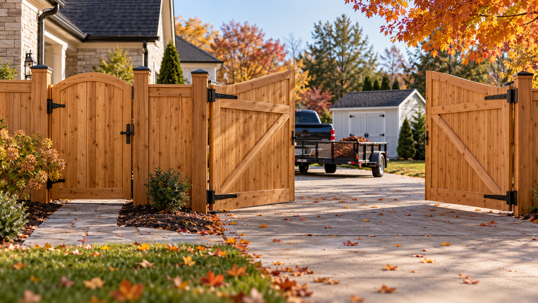
Fall in Central Indiana is when a lot of homeowners finally get around to the fence project they talked about all summer. It is also when the gate starts getting more use than any other part of the yard. Leaf cleanup, mulch deliveries, the mower going in and out, and a steady flow of holiday guests all run through one opening. If you are planning fence gate installation in Carmel, Fishers, Westfield, or anywhere around Indianapolis, the gate deserves more thought than it usually gets.
I'm Sean Kennedy, and I own Stand Strong Fencing serving Carmel and Indianapolis. I meet a lot of our customers in person, and the gate is the part of the conversation where people most often say, "I hadn't thought about that." Most people know what material they want for the fence. Far fewer have measured their mower, thought about where a trailer would turn in, or wondered why the neighbor's gate drags across the patio every spring.
This guide answers the question we hear most, which is what size gate you actually need. From there it covers the main gate types, the hardware that holds up, how Indiana weather affects gates, and what to know about permits and safety rules before you build.
What Size Fence Gate Do You Need?
Start with what will pass through the gate, not with what looks proportional on the fence line. A gate that is a few inches too narrow becomes a daily annoyance, and it is one of the few fence decisions that is hard to fix later without rebuilding the posts.
Here is how we think through sizing with homeowners. These are common starting points, not rules, and your own equipment and yard layout should have the final say.
Walk gates for people and small equipment
A basic walk gate for foot traffic can be fairly narrow. In practice, most homeowners are happier with a little extra width. If you plan to push a wheelbarrow, roll trash and recycling bins to the curb, or move a push mower through, a gate around four feet wide gives you room without scraping knuckles on the latch post.
Before you settle on a width, measure the widest thing you move regularly. That might be a push mower with the bag attached, a garden cart, or a snowblower. Add a few inches on each side so you are not threading a needle every Saturday.
Wider single gates for riding mowers and bigger loads
Riding mowers, zero-turn mowers, and utility carts need more width than most people expect. Measure the deck at its widest point, including any side discharge chute, then give yourself comfortable clearance. A gate in the five to six foot range often works, but check your actual machine. A single gate this wide gets heavy, so it needs a stout post and good hinges, which we cover below.
Double drive gates for vehicles, trailers, and deliveries
If you want to drive a vehicle into the backyard, park a boat or camper, or let a landscaper's trailer or a mulch delivery get close to the beds, a double drive gate is usually the answer. Two leaves swing from the center, which keeps each leaf a manageable size and weight.
Many residential drive gates land somewhere around ten to twelve feet of total opening. If you are backing a trailer in at an angle or have a tight turn from the driveway, you may want more. Walk the path a vehicle would take and look at the turning radius, not just the straight-line width. A gate that is technically wide enough can still be impossible to use if the approach is tight.
Height that matches the fence and its purpose
Most gates match the height of the fence they sit in, so a six-foot privacy fence gets a six-foot gate. There are exceptions. A front-yard decorative fence may call for a shorter gate, and a pool barrier has specific height and latch requirements, which we cover later in this post. Your city and HOA may also have height limits, especially for front yards.
Common Fence Gate Styles for Carmel and Indianapolis Homes
Once the size is settled, the next choice is the gate style. The right style depends on the fence material, how the gate is used, and what your neighborhood and HOA allow.
Single swing walk gates
This is the gate most yards have. It hinges on one post and latches on another. It is simple, affordable, and reliable when the posts and hinges are sized correctly. For side yards between houses, which are common in newer subdivisions in Westfield and Noblesville, a single walk gate is usually all you need.
Double swing drive gates
Two leaves meet in the middle and latch together, with a drop rod that pins one leaf into the ground so the pair stays closed and stable. This setup handles wide openings well. It does need a fairly level stretch of ground where the leaves swing, or a plan to deal with slope.
Arched and decorative gates
An arched top or a scalloped design can make a gate feel like an entry rather than an interruption in the fence. This is popular on front-yard and side-yard gates in established neighborhoods like Meridian-Kessler and Irvington, where older homes have more architectural detail. Decorative tops work on wood, vinyl, and metal gates.
Matching versus contrasting gates
Most homeowners match the gate to the fence so it blends in. Some prefer a contrasting gate as a focal point, for example a metal gate set into a wood fence. Either works. If you live in an HOA community, check whether the covenants require gates to match the fence material and color before you fall in love with a contrast design.
How Gate Material Affects Weight, Sag, and Upkeep
The gate material usually follows the fence material, but each one behaves differently as a gate because a gate is a moving, cantilevered load hanging off a single post.
Wood gates
Wood fencing is still the most common choice around Indianapolis, and wood gates are easy to match to it. Wood is also the material most prone to sag. Boards absorb moisture during humid Indiana summers and dry out in winter, and over time the latch side of a wide wood gate can drop. A well-built wood gate uses a rigid frame with diagonal bracing that runs in the right direction, from the bottom of the hinge side up toward the top of the latch side, so the brace holds the gate up rather than letting it fold.
Wood gates need the same care as the rest of the fence. Staining or sealing helps slow moisture movement, which helps the gate keep its shape.
Vinyl gates
Vinyl and PVC fencing appeals to homeowners who are done with staining. Vinyl gates are lighter than wood, but wide vinyl gates usually rely on an internal metal frame or reinforcement to stay square. When you compare quotes, ask how the gate is reinforced, especially for anything wider than a standard walk gate.
Aluminum and ornamental steel gates
Metal gates hold their shape well and are a common choice for pool areas, front yards, and homes where the owner wants an open, decorative look. Aluminum fencing is light and does not rust, which makes it a good fit for gates that see a lot of traffic. Ornamental steel fencing is heavier and stronger, which some homeowners prefer for wide drive gates or a more substantial look at the front of the property.
Chain link gates
Chain link gates are practical and durable, and they are common for dog runs, utility areas, and the back side of larger lots. They are relatively light for their size, which makes wide chain link drive gates easier to support.
Gate Hardware That Lasts Through Indiana Seasons
Hardware is where many gates fail early. A good gate on weak hinges will sag, bind, or stop latching within a few seasons. When we walk a project with a homeowner, we talk through hardware as carefully as the gate itself.
Hinges
Hinges carry the full weight of the gate, and the load is concentrated on the top hinge. Heavier or wider gates need heavier hinges, and sometimes a third hinge. Adjustable hinges are worth considering because they let you correct small amounts of sag over time without rebuilding anything.
Look for hinges with a finish rated for outdoor use. Indiana humidity, spring storms, and winter road salt that drifts in from the driveway all work on exposed metal.
Latches
The latch should be easy for adults to operate and should catch reliably every time the gate closes. Gravity latches that catch automatically when the gate swings shut are popular for walk gates. Lockable latches add security for side yards and gates that face the street.
If children or pets use the yard, think about the latch height and whether it can be reached or nosed open. For pool gates, latch placement is a safety requirement, not a preference.
Self-closing hinges and springs
A self-closing hinge or gate spring pulls the gate shut after you walk through. This is required for many pool gates, and it is helpful for any household with dogs that slip out or kids who forget to close the gate behind them. The closing force should be strong enough to close and latch the gate from any open position, but not so strong that it slams.
Drop rods and cane bolts
On double drive gates, a drop rod on one leaf slides into a sleeve or a hole in the ground to hold that leaf in place while the other leaf latches to it. A properly set sleeve keeps the rod from wearing a hole in the lawn and keeps the gate pair aligned.
Wheels and gate supports
Some very wide gates use a caster wheel on the latch end to help carry the weight. This can work on a paved surface, but on grass or gravel the wheel can dig in and drag. A properly sized post and frame is usually the better first solution.
Why Gate Posts Matter More Than the Gate
The single biggest factor in whether a gate works well for years is the post it hangs on. A gate acts like a lever. All of its weight hangs out to one side, and every time it swings open, that weight pulls on the hinge post. Over time, an undersized or shallow post will lean toward the gate, and the latch side will drop until it drags or no longer lines up.
Central Indiana makes this worse. Our winters bring repeated freeze-thaw cycles, and much of the area has clay soil that holds water. When wet soil freezes, it expands and can push posts upward, a process called frost heave. Gate posts that are not set deep enough, or are set in a footing that lets water collect, can shift a little every winter. A gate that latched perfectly in October may stick in March.
That is why we pay close attention to gate post footings. Gate posts typically get heavier posts and deeper, larger concrete footings than line posts, sized to the weight and width of the gate. That detail is invisible once the job is done, and it is the main reason a well-built gate still swings cleanly years later.
If you are replacing an old fence, the gate post is also the post we most often find has moved. If your current gate drags, check whether the post is leaning before you blame the gate itself.
Planning Gate Placement Around Your Yard
Where the gate goes matters as much as how big it is. A few minutes of planning can save years of walking the long way around.
Follow the paths you already use
Look at where people actually walk. Worn grass, the route from the garage to the patio, and the way your kids cut through to a neighbor's yard all tell you where a gate will get used. Put the gate where the traffic already goes.
Think about swing direction and clearance
Decide which way each gate should swing and make sure nothing blocks it. Patios, air conditioning units, downspouts, raised beds, and slopes can all get in the way. A gate that swings into the yard on a slope may hit the ground partway open. On sloped lots, which are common around Geist and parts of Zionsville, the gate may need to swing downhill or be built with extra ground clearance.
Plan for the next project
If you might add a shed, a pool, or a driveway extension later, or you expect to bring in a tree service or landscaper with equipment, plan the drive gate now. Adding a wide gate to an existing fence later is possible, but it usually means new posts and footings.
Locate utilities before digging
Gate posts go deep, so utility locating matters. The Common Ground Alliance's 811 Before You Dig program recommends contacting 811 a few business days before any digging, and it specifically includes fence installation. Utilities then mark the approximate location of buried lines so posts can be placed safely. Older Indianapolis neighborhoods in particular can have lines that are not where you would expect.
Permits, HOA Rules, and Pool Gate Requirements
Gates are part of the fence, so they fall under the same permit and HOA rules. A few points are worth knowing before you finalize a design.
Carmel fence permits
The City of Carmel Department of Community Services requires a fence permit for every new and replacement fence inside Carmel city limits. Repairs that affect more than half of an existing fence also require a permit. Fishers, Westfield, Noblesville, Zionsville, and Indianapolis each have their own rules, so check with the city or town where your property sits. Height limits for front yards are often stricter than for back yards, which can affect a front-yard gate design.
HOA approval
Many Hamilton County neighborhoods have an architectural review committee that reviews fence plans before you build. The committee may care about gate material, color, height, style, and whether the gate matches the fence. Submitting the gate details with your fence plans avoids a second round of review.
Pool gates
If your fence encloses a pool or hot tub, the gate becomes a safety device. The U.S. Consumer Product Safety Commission's Safety Barrier Guidelines for Residential Pools recommend that pedestrian gates open outward, away from the pool, and be both self-closing and self-latching. When the latch release sits lower than 54 inches from the bottom of the gate, the CPSC recommends placing it on the pool side at least three inches below the top of the gate, with no openings larger than half an inch within 18 inches of the release.
The CPSC notes that a gate that fails to close and latch completely is the weak point in even the best pool fence. Its guidelines are recommendations, and some local codes adopt or add to them, so confirm the rules that apply to your address. Pool gates also need regular checks to make sure they still close and latch on their own, especially after winter.
Getting Your Gate Ready for an Indiana Winter
Since this is the time of year many homeowners are scheduling fence work, it is worth thinking about how a gate will handle the months ahead.
Snow and ice can block a gate from opening if it swings into an area where snow drifts or where you pile shoveled snow. Plan swing direction with winter in mind, and keep the latch area clear so ice does not lock it shut.
Before the first hard freeze, walk your existing gates. Check that the hinges are tight, the latch catches cleanly, and the bottom of the gate clears the ground. Lubricating hinges and latches with an outdoor-rated product helps them work smoothly in the cold. If a gate already drags, get it looked at before winter. A small problem in the fall can become a stuck gate by February, after a few freeze-thaw cycles move the post.
Fall is also a good time to schedule new gates and fences in general. The weather is usually mild, and getting posts set before the ground freezes keeps your project moving.
When to Repair a Gate and When to Replace It
Not every problem gate needs to be replaced. Some common issues can be repaired.
A gate that has started to sag slightly may only need its hinges tightened or adjusted, or a brace added or reset. A latch that no longer lines up can sometimes be adjusted or moved. Loose screws and worn hinge pins are simple fixes.
Replacement makes more sense when the hinge post itself is leaning or has rotted at the ground line, when a wood gate frame has rotted or split, or when the gate is simply too narrow for how you now use the yard. If you are already planning a residential fence replacement, that is the easiest time to upgrade gate sizes and hardware, since new posts and footings are going in anyway.
How to Choose a Fence Gate Installation Contractor in Carmel
Before I got into fencing, I spent a long career in sales and business development in building automation and energy management. One thing that carried over is the value of walking through the details with a customer before anything gets built. A gate is a good test of whether a contractor is thinking about those details.
When you talk with fence companies, ask how they size gates, what kind of hinges and latches they use, and how they set gate posts differently from line posts. Ask how they handle slope and swing direction on your lot, and whether they will help with permit and HOA paperwork. Get the gate sizes, hardware, and post details in writing so you can compare quotes on equal terms.
At Stand Strong Fencing, I meet many of our customers personally and walk them through materials, layout, and the install timeline. Every installation is backed by the Stand Strong Lifetime Workmanship Warranty. We also offer financing for homeowners who want to spread the cost of a new fence and gate.
Frequently Asked Questions About Fence Gates in Carmel
What size gate do I need for a riding mower?
Measure the widest point of your mower, including the deck and any discharge chute, then add comfortable clearance on both sides. Many riding mowers fit through a single gate in the five to six foot range, but always check your own machine before deciding.
How wide should a double drive gate be?
Many residential drive gates are around ten to twelve feet wide in total. If you plan to back a trailer or camper in at an angle, or the approach from the driveway is tight, a wider opening may be easier to use.
Do I need a permit for a fence gate in Carmel?
Carmel requires a permit for all new and replacement fences within city limits, and gates are part of the fence. Repairs affecting more than half of an existing fence also need a permit. Nearby cities have their own rules, and HOAs may require separate approval.
Why does my gate sag or drag?
The most common causes are an undersized or shallow hinge post, hinges that are too light for the gate, or a wood gate without proper bracing. In Central Indiana, frost heave can also shift gate posts over the winter.
What does a pool gate need?
The CPSC recommends that pool gates open outward, away from the pool, and be self-closing and self-latching, with specific guidance on latch placement. Check your local code as well, since some communities adopt their own requirements.
Plan Your Fence Gate With Stand Strong Fencing
A gate that is sized right, hung on the right post, and fitted with good hardware is something you will barely think about for years. If you are planning a new fence or want to upgrade the gates on your current one, request a quote from Stand Strong Fencing or call (765) 305-5648. We serve homeowners across Carmel, Indianapolis, Fishers, Westfield, Noblesville, and Zionsville, and we would be glad to walk your yard with you.