Types of Fences in Durham & Chapel Hill, NC
Explore Wood, Vinyl, Aluminum, Chain-Link & Custom Fencing Options
Choosing a fence involves more than deciding where to put it. The material, style, height, and design you select can affect your property's appearance, privacy, security, maintenance requirements, and long-term value.
With so many fencing options available, how do you know which one is right for your home or business?
At Stand Strong Fencing of Durham & Chapel Hill, we help property owners throughout Durham, Chapel Hill, and surrounding North Carolina communities compare different types of fences and find solutions that fit their needs.
Whether you're looking for a traditional wood privacy fence, low-maintenance vinyl fencing, decorative aluminum fencing, or a practical chain-link enclosure, understanding the differences between fence materials is the first step toward making an informed decision.
Our team offers professional fence installation and can help you select a fencing system that complements your property, suits your budget, and performs well in North Carolina's climate.
Explore our fencing options below, or call (984) 267-4200 to schedule a free fence estimate.
What Are the Different Types of Fences?
Residential and commercial fences are generally categorized by their primary construction material. Each material offers different advantages, and many can be customized with different heights, colors, panel configurations, and decorative features.
Some of the most common types of fencing include:
Wood fencing: A traditional, versatile option for privacy, decorative boundaries, and custom designs.
Vinyl fencing: A low-maintenance alternative available in privacy, semi-privacy, and decorative styles.
Aluminum fencing: An attractive, rust-resistant option that provides security and visibility.
Chain-link fencing: A durable, economical choice for residential, commercial, and recreational enclosures.
Composite fencing: An alternative that combines manufactured materials to create wood-inspired designs.
Ornamental metal fencing: Decorative steel or aluminum fencing suited to certain security and architectural applications.
Split-rail and agricultural fencing: Open-style fencing commonly used for larger properties and rural landscapes.
The best fence material depends on what you want your fence to accomplish.
A homeowner looking for complete backyard privacy may prefer a solid wood or vinyl fence. Someone who wants to define a property boundary without blocking the view may choose aluminum. A business that needs to secure a large perimeter may find chain-link fencing more practical.
Let's explore these options in greater detail.
Wood Fencing: Traditional Beauty and Versatility
Wood remains one of the most recognizable and versatile fencing materials.
Its natural appearance complements a wide range of architectural styles, from older homes in established Durham neighborhoods to newer residential developments throughout the Triangle.
Wood fencing can be customized in ways that aren't always possible with prefabricated fencing systems. Different board arrangements, decorative tops, heights, and finishes allow homeowners to create a fence that suits their property.
Popular Wood Fence Styles
Wood privacy fencing: Solid or closely spaced boards provide screening from neighboring properties and nearby activity.
Board-on-board fencing: Overlapping boards help reduce visible gaps as wood naturally expands and contracts.
Shadowbox fencing: Alternating boards on opposite sides of the rails create a finished appearance from both directions while allowing some airflow.
Wood picket fencing: A traditional decorative option frequently used in front yards, gardens, and smaller residential spaces.
Horizontal wood fencing: Horizontal boards create a contemporary appearance that works well with modern homes and outdoor living areas.
Split-rail fencing: An open design commonly used to define boundaries on larger or more rural properties.
Advantages of Wood Fencing
Natural appearance and traditional curb appeal
Extensive customization possibilities
Excellent privacy with appropriate designs
Can be painted or stained in various colors
Suitable for many residential landscapes
Individual components can often be repaired or replaced
Considerations Before Choosing Wood
Wood is a natural material that responds to environmental conditions.
North Carolina's humidity, rainfall, and seasonal temperature changes can contribute to weathering, warping, and deterioration over time.
Periodic staining, sealing, cleaning, and inspections can help extend the life of a wood fence.
Wood fencing is a strong choice for homeowners who value privacy, natural aesthetics, and design flexibility.
Vinyl Fencing: Low-Maintenance Privacy and Style
Vinyl, also called PVC fencing, has become a popular option for homeowners who want a clean appearance without the ongoing maintenance associated with traditional wood.
Unlike wood, vinyl doesn't require routine painting or staining. It also resists rot and insect damage.
Vinyl fencing is manufactured in a variety of styles, making it suitable for privacy, decorative boundaries, and other residential applications.
Popular Vinyl Fence Styles
Full privacy vinyl fencing: Solid panels create separation between neighboring properties and outdoor spaces.
Semi-privacy vinyl fencing: Panels incorporate small openings or spacing to allow some airflow while maintaining substantial screening.
Vinyl picket fencing: Decorative fencing with a traditional appearance and minimal maintenance requirements.
Vinyl ranch-rail fencing: An open design suited to larger properties and decorative boundaries.
Decorative vinyl fencing: Options may include lattice accents, contrasting colors, and specialized post caps.
Advantages of Vinyl Fencing
No routine painting or staining
Resistant to rot and insect damage
Easy to clean with water and mild soap
Available in several colors and styles
Excellent privacy options
Consistent appearance across fence panels
Considerations Before Choosing Vinyl
Vinyl fencing may have a higher initial material cost than certain wood or chain-link options.
Some vinyl systems also offer less flexibility for steep slopes or unusual property layouts.
Quality matters, too. Product construction, reinforcement, and installation methods can affect performance.
Vinyl fencing is especially appealing for Durham homeowners who want backyard privacy with relatively little ongoing maintenance.
Aluminum Fencing: Decorative Security Without Blocking Views
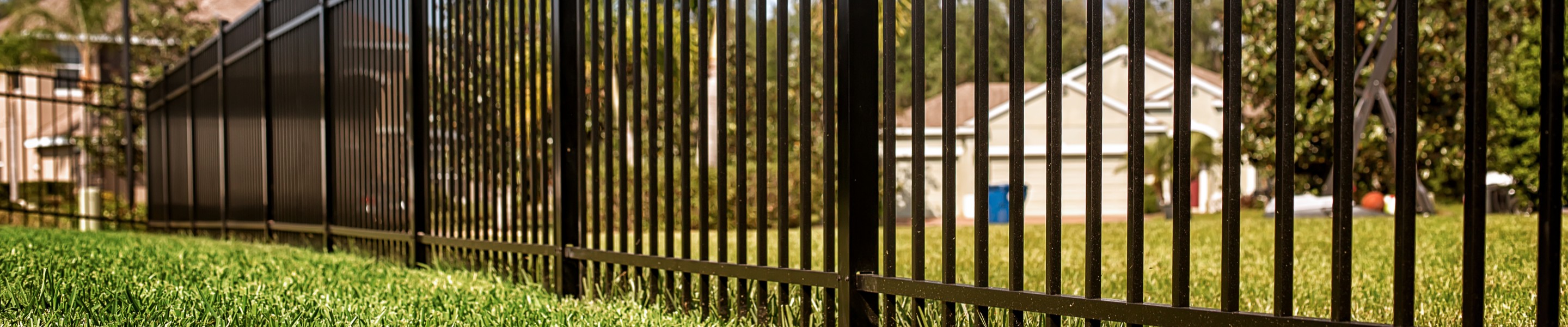
Aluminum fencing provides an elegant appearance while maintaining visibility through the fence.
Its vertical pickets and open design make it popular around front yards, gardens, swimming pools, and residential properties with attractive landscaping.
Many aluminum fencing systems feature protective powder-coated finishes that resist corrosion and help maintain their appearance.
Popular Aluminum Fence Styles
Traditional ornamental aluminum: Vertical pickets and decorative rails create a classic metal-fence appearance.
Flat-top aluminum fencing: A clean, streamlined style suited to contemporary and traditional homes.
Decorative finial fencing: Ornamental picket tops add architectural detail.
Pool fencing: Certain aluminum fence systems can be configured to satisfy applicable pool barrier requirements.
Commercial aluminum fencing: Heavier-duty products may be appropriate for business entrances, multifamily communities, and other commercial properties.
Advantages of Aluminum Fencing
Resistant to rust
Relatively low maintenance
Decorative appearance
Maintains visibility and airflow
Available in several styles and finishes
Certain systems can accommodate sloped terrain
Considerations Before Choosing Aluminum
Aluminum fencing typically doesn't provide the visual privacy of a solid wood or vinyl fence.
It may also cost more than some basic fencing materials.
For properties requiring higher levels of impact resistance or specialized security, other metal fencing systems may be more appropriate.
Aluminum fencing is an excellent option when appearance, boundary definition, and visibility are more important than complete privacy.
Chain-Link Fencing: Practical, Durable and Cost-Effective
Chain-link fencing is one of the most practical options for enclosing large areas.
Its woven metal design creates a visible boundary while allowing light and airflow to pass through.
Chain-link fencing is commonly used for residential backyards, dog runs, commercial properties, recreational facilities, and utility areas.
Types of Chain-Link Fencing
Galvanized chain-link: Steel fencing protected by a zinc coating to help resist corrosion.
Vinyl-coated chain-link: Chain-link fencing with a colored protective coating, often available in black or green.
Residential chain-link: Suitable for backyard enclosures, pet containment, and property boundaries.
Commercial chain-link: Systems designed for larger properties and applications requiring additional strength or security features.
Privacy-enhanced chain-link: Privacy slats or screening products can reduce visibility through the fence.
Advantages of Chain-Link Fencing
Generally economical for larger enclosures
Durable and functional
Allows visibility through the fence
Relatively low maintenance
Useful for residential and commercial applications
Available in different heights and configurations
Considerations Before Choosing Chain-Link
Standard chain-link fencing provides little visual privacy.
Its industrial appearance may not complement every residential property.
While privacy slats can improve screening, they may also affect wind loading and maintenance requirements.
Chain-link fencing is often a practical choice for property owners who prioritize function, security, and cost-effective coverage.
Composite Fencing: A Modern Alternative to Traditional Wood
Composite fencing combines manufactured materials, often including wood fibers and polymers, to create products with a wood-inspired appearance.
Depending on the manufacturer and product, composite fencing may offer different maintenance and durability characteristics than natural wood.
Composite fences are frequently considered by homeowners who want privacy and a contemporary appearance.
Advantages of Composite Fencing
Wood-inspired appearance
Reduced need for routine staining or painting
Available in certain privacy-oriented designs
Consistent manufactured profiles
Options suited to modern architecture
Considerations Before Choosing Composite
Composite fencing products vary significantly in construction, appearance, and performance.
Some systems have higher upfront costs than traditional wood.
Availability, installation requirements, and manufacturer warranties also differ.
If you're considering composite fencing for your Durham property, our team can discuss available products and whether they're appropriate for your project.
Ornamental Steel and Specialty Metal Fencing
For certain residential and commercial applications, ornamental steel fencing offers another alternative.
Steel is generally stronger and more rigid than aluminum, making it useful for some security-focused applications.
Ornamental steel fencing can provide a traditional wrought-iron-inspired appearance without requiring a custom wrought-iron system.
However, protective coatings and ongoing maintenance are important considerations because exposed steel can corrode.
Specialty metal fencing may be appropriate for commercial properties, decorative entrances, and applications requiring specific structural characteristics.
Privacy Fence Styles: Which Design Is Right for You?
Fence material is only one part of the decision.
The design of the fence determines how much privacy it provides, how it looks from different angles, and how it interacts with your outdoor space.
Solid Privacy Fencing
Solid privacy fences use closely fitted panels or boards to limit visibility.
They're popular for backyard entertaining areas, patios, and properties with nearby neighbors.
Wood and vinyl are common materials for this style.
Semi-Privacy Fencing
Semi-privacy fences provide some screening while allowing limited visibility or airflow.
These designs may include spaced boards, decorative openings, or lattice features.
They can be a good compromise for homeowners who want separation without a completely enclosed appearance.
Shadowbox Fencing
Shadowbox fences use alternating boards on opposite sides of the rails.
This creates an attractive appearance from both directions and allows some airflow.
However, shadowbox fencing generally provides less complete visual privacy than a solid board-on-board or full-panel fence.
Horizontal Fencing
Horizontal fences feature boards running parallel to the ground.
This creates a contemporary appearance that works especially well with modern landscaping, patios, and outdoor entertainment areas.
Horizontal designs can be constructed from different materials, although proper support and installation are important.
Comparing Fence Types: Which Material Is Best?
Every fencing material has strengths and limitations.
The following comparison can help narrow your choices.
| Fence Type | Privacy | Maintenance | Common Uses |
|---|---|---|---|
| Wood | High with solid designs | Moderate to high | Backyards, privacy, decorative fencing |
| Vinyl | High with privacy panels | Low | Privacy, residential boundaries |
| Aluminum | Low | Low | Decorative fencing, pools, gardens |
| Chain-link | Low without screening | Low | Pets, commercial fencing, large areas |
| Composite | High with solid panels | Low to moderate | Privacy, modern residential designs |
| Ornamental steel | Low | Varies by finish | Decorative and security applications |
These are general characteristics. Actual performance depends on the specific product, installation, environmental exposure, and maintenance.
What Is the Best Fence for Privacy?
If privacy is your primary goal, solid wood and vinyl fencing are typically among the strongest options.
Both can create substantial screening between your yard and neighboring properties.
Wood provides greater flexibility in certain custom designs, while vinyl requires less routine surface maintenance.
Composite privacy fencing may also be worth considering.
When choosing a privacy fence, think beyond the material.
Fence height, panel gaps, property elevation, and nearby structures can all affect how much privacy the finished fence provides.
For example, a six-foot privacy fence may offer excellent screening on level ground but provide less privacy from a neighboring property located uphill.
A professional evaluation can help determine the most effective fence design for your yard.
What Is the Best Fence for Dogs?
The best fence for dogs depends on the animal's size, behavior, and activity level.
For larger dogs, a taller and more durable enclosure may be appropriate.
For smaller dogs, the spacing between pickets and gaps beneath the fence can be especially important.
Common pet fencing options include:
Wood privacy fencing
Vinyl privacy fencing
Aluminum fencing with appropriate picket spacing
Chain-link fencing
Customized enclosures and dog runs
If your dog jumps, climbs, digs, or pushes against fencing, mention those behaviors during your consultation.
Choosing the right design from the beginning can help prevent escape problems and unnecessary modifications.
What Type of Fence Is Best for North Carolina Weather?
Durham and Chapel Hill experience hot, humid summers, periods of heavy rainfall, seasonal storms, and occasional freezing conditions.
These factors can influence fence material selection and long-term performance.
Wood: Offers excellent versatility but benefits from periodic sealing, staining, and inspections.
Vinyl: Resists rot and insect damage and generally requires little maintenance beyond cleaning.
Aluminum: Resists rust and is well suited to many outdoor applications.
Chain-link: Galvanized and coated products provide corrosion protection, although coating quality and exposure conditions matter.
Composite: Maintenance and weather resistance vary by product and manufacturer.
Regardless of material, proper installation is essential.
Post depth, soil conditions, drainage, and structural support can have a significant effect on how well a fence performs over time.
How Long Do Different Types of Fences Last?
Fence lifespan depends on material quality, installation, maintenance, climate, and exposure.
Wood fencing may provide many years of service when properly maintained, while vinyl and aluminum products often offer longer service lives with fewer routine maintenance requirements.
Chain-link fencing can also remain functional for decades when properly installed and protected against corrosion.
However, no material is completely maintenance-free or immune to damage.
Regular inspections can help identify loose hardware, damaged panels, shifting posts, and other issues before they become more serious.
When comparing fence types, consider the total cost of ownership rather than focusing only on the initial installation price.
Which Fence Type Is the Most Affordable?
Chain-link fencing is frequently among the more economical choices for enclosing large areas.
Certain basic wood fence styles may also offer relatively affordable installation costs.
Vinyl, aluminum, composite, and ornamental metal fencing can involve higher upfront material costs, depending on the product and design.
However, initial price isn't the only consideration.
A fence that requires less maintenance may offer long-term value even when its installation cost is higher.
Factors affecting fencing prices include:
Material type and quality
Total fence length
Fence height
Gate quantity and design
Property terrain
Soil conditions
Installation complexity
Removal of existing fencing
Custom features
The most reliable way to compare costs is to request estimates for the specific materials and designs you're considering.
Choosing a Fence for a Sloped or Uneven Yard
Not every property in the Durham area is perfectly level.
Wooded lots, rolling landscapes, and changes in elevation can create installation challenges.
Fortunately, many fencing systems can accommodate uneven ground.
Depending on the material, a fence may be installed using stepped sections or racked panels that follow the slope.
Certain aluminum systems are particularly adaptable to sloped terrain, while wood fencing may offer customization opportunities.
The best method depends on the degree of slope, desired appearance, and need to minimize gaps beneath the fence.
For properties with pets, ground clearance should be a particular consideration.
Fence Colors, Finishes and Decorative Features
The appearance of your fence should complement your home's exterior and landscaping.
Different materials offer different design possibilities.
Wood fencing can be stained or painted in a variety of finishes, from natural tones to darker contemporary colors.
Vinyl fencing is commonly available in white, tan, gray, and other manufacturer-specific colors.
Aluminum fencing is frequently available in black, bronze, and other powder-coated finishes.
Decorative features may include:
Lattice tops
Decorative post caps
Custom gates
Horizontal panel designs
Ornamental picket tops
Contrasting colors
Decorative trim
Mixed-material designs
When selecting colors and decorative features, consider how the fence will look alongside your home, driveway, landscaping, and neighboring properties.
Residential vs. Commercial Fencing: What's the Difference?
Residential fencing typically emphasizes privacy, curb appeal, pet containment, and outdoor living.
Commercial fencing often places greater emphasis on security, access control, durability, and enclosing larger areas.
For residential properties, wood, vinyl, and decorative aluminum are common choices.
Commercial applications may involve chain-link fencing, ornamental metal systems, privacy screening, and specialized gates.
Some materials work well in both environments, but product specifications and installation requirements may differ.
Our team helps residential and commercial customers select fencing appropriate for their intended application.
Why Professional Fence Installation Matters
Even the highest-quality fencing material can underperform if it's installed incorrectly.
Fence installation requires careful attention to property layout, post placement, structural support, panel alignment, and gate functionality.
Poor installation can lead to leaning posts, uneven panels, sagging gates, or premature damage.
Professional installation also helps address challenges such as sloped terrain, difficult soil conditions, drainage, and irregular boundaries.
At Stand Strong Fencing of Durham & Chapel Hill, we work with customers to identify suitable materials and designs before installation begins.
Our goal is to provide a finished fence that combines appearance, function, and long-term value.
Fence Types for Durham, Chapel Hill & Surrounding Communities
Property styles and fencing needs vary throughout the Triangle region.
A homeowner in an established Durham neighborhood may prioritize privacy and architectural compatibility, while someone with a larger property in Hillsborough or Pittsboro may need fencing that covers more ground.
We provide fencing solutions for customers throughout:
Durham, NC
Chapel Hill, NC
Carrboro, NC
Hillsborough, NC
Morrisville, NC
Pittsboro, NC
Raleigh, NC
Bahama, NC
Butner, NC
Creedmoor, NC
Whether you're installing a fence around a suburban backyard, defining the boundaries of a rural property, or securing a commercial facility, we can help you explore materials and styles suited to your needs.
Frequently Asked Questions About Fence Types
What are the most popular types of residential fences?
Wood, vinyl, aluminum, and chain-link are among the most common residential fencing materials. Wood and vinyl are popular for privacy, aluminum for decorative boundaries, and chain-link for practical enclosures.
Which type of fence lasts the longest?
High-quality aluminum and vinyl fencing can offer long service lives with relatively low maintenance. Actual lifespan depends on product quality, installation, environmental conditions, and maintenance.
Is wood or vinyl fencing better?
Wood is ideal for homeowners who want a natural appearance and customization flexibility. Vinyl is often preferred by homeowners seeking privacy with less ongoing maintenance. The better choice depends on budget, appearance, and long-term priorities.
What is the best fence for a backyard?
The best backyard fence depends on its intended purpose. Solid wood or vinyl may be best for privacy, while aluminum and chain-link are suitable when visibility and enclosure are priorities.
What fence type adds the most curb appeal?
Decorative aluminum, traditional wood picket, and thoughtfully designed privacy fences can all enhance curb appeal. The most attractive option is typically one that complements the home's architecture and landscaping.
What is the cheapest type of fence?
Chain-link fencing is often one of the most affordable options for larger enclosures. Basic wood fencing may also be economical, depending on the design and local material costs.
What type of fence is easiest to maintain?
Vinyl and aluminum fencing generally require less routine maintenance than wood. Occasional cleaning and inspections are still recommended.
What type of fence is best for a pool?
Aluminum and certain vinyl fencing systems are common choices for pool enclosures. However, the selected design must meet applicable pool safety requirements, including barrier height, opening limitations, and gate hardware.
Can different types of fencing be combined?
Yes. Some properties benefit from combining materials, such as using privacy fencing around a backyard entertainment area and decorative aluminum along a more visible boundary. Design compatibility and installation requirements should be evaluated.
How do I know which fence type is right for my property?
Start by identifying your priorities, such as privacy, security, appearance, pet containment, maintenance, and budget. A professional fence consultation can help you compare materials and determine which option best suits your property.
Find the Right Fence for Your Durham or Chapel Hill Property
With so many fencing materials and styles available, choosing the right option can feel overwhelming.
You don't have to make that decision alone.
At Stand Strong Fencing of Durham & Chapel Hill, we help homeowners and businesses compare fence types, understand their advantages, and select solutions that fit their properties.
Whether you're interested in a traditional wood privacy fence, low-maintenance vinyl, decorative aluminum, durable chain-link, or a custom fencing design, our team is ready to help.
Call (984) 267-4200 or contact Stand Strong Fencing of Durham & Chapel Hill to schedule your free fence estimate.
Explore your options, compare materials, and discover a fence that provides the appearance and functionality your property deserves.

-
"Did what they said they would do, at the price they quoted, on the day they said they would be there. You really can't beat that these days."- Steve Keogh
-
"Awesome experience. Fast service and very responsive. Highly recommended."- Brian Davis