


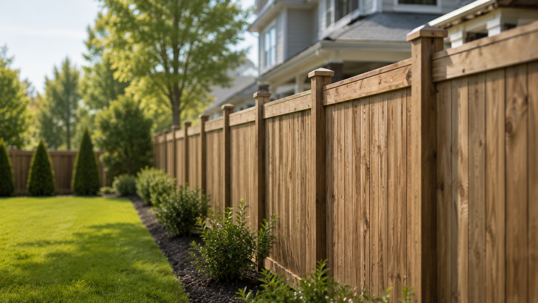
Anyone can put a post in the ground. The difference between a fence that's still straight and solid in year eight versus one that's leaning and gapping by year three almost never comes down to the material. It comes down to the contractor and the specific decisions they made during installation that you, as the homeowner, never see.
I've worked on fences across Carmel, Westfield, Fishers, and into the Indianapolis metro long enough to know exactly which shortcuts cause problems down the road. Here's what actually separates a solid fence contractor from one that's just fast, and what's worth understanding before you sign a contract with anyone.
Why Contractor Choice Matters More Than Material Choice
Central Indiana's freeze-thaw cycle is the single biggest factor most homeowners don't think about when picking a fence contractor, and it's the one factor that separates a fence that's still straight after a decade from one that needs adjustment every couple of years. Winters here swing between hard freezes and warm-ups multiple times a season, and that movement pushes against post footings that weren't set deep enough or with the right concrete mix. A contractor who doesn't account for this with proper post depth and footing technique ends up with fences that heave, lean, or develop gaps within a few years, regardless of how good the fence material itself was.
Soil composition across the area also varies more than people expect. Some parts of Carmel and the surrounding suburbs have heavier clay soil that holds water and expands more dramatically through freeze-thaw cycles, while other areas drain more easily. A contractor who treats every yard the same, rather than adjusting footing depth and drainage based on actual soil conditions, is setting up a problem that won't show up until well after the invoice is paid.
Questions Worth Asking Any Contractor Before You Sign
A few questions tend to separate a contractor who's thought through your specific property from one quoting a generic per-foot price. Ask how they determine footing depth for your specific yard, and whether they adjust that depth based on soil testing or just use a standard depth everywhere regardless of conditions. Ask whether they handle permitting and HOA submission on your behalf or expect you to manage that process yourself, since that affects both your timeline and how much legwork falls on you. And ask what happens if a post heaves or a panel shifts within the first year, specifically whether that's covered under warranty labor or treated as a new service call.
The answers to these questions tell you more about a contractor's actual process than any number of five-star reviews will.
Breaking Down Fence Material and Style Options
Material | Durability | Maintenance | Typical Cost Range | Best Use Case |
|---|---|---|---|---|
Wood (privacy/picket) | Moderate, 10-15 years with care | High — staining/sealing every 2-3 years | $$ | Classic look, budget-conscious privacy |
Vinyl | High, 20+ years | Low — occasional cleaning | $$$ | Low-maintenance privacy or picket style |
Aluminum (ornamental) | High, resists rust | Low | $$$ | Pool enclosures, decorative perimeter |
Chain Link | High, very durable | Very low | $ | Budget security, pet containment |
Privacy fencing remains the most requested style for backyard security and noise reduction, with both wood and vinyl serving that need depending on budget and maintenance preference. Ornamental fencing, often aluminum, tends to go in front yards or around pools where homeowners want a defined boundary without blocking the view entirely.
What Actually Drives Fence Project Pricing
Two quotes for what sounds like a similar fence can land surprisingly far apart, and the gap usually comes down to a handful of specific factors. Material grade is the biggest one — standard pressure-treated pine costs noticeably less than cedar, and standard-gauge aluminum costs less than heavier ornamental aluminum systems. Footing depth and concrete mix also factor into labor cost, since proper depth for this region's freeze-thaw cycle takes more time and material than a shallower install would.
Fence height, gate count, and any custom design elements add cost as well, since each gate requires its own hardware and additional labor to fit and align properly. And if your property has unusual grade changes or requires extra excavation around trees, utility lines, or existing structures, that adds time to the installation that a flat per-foot estimate doesn't always capture upfront. A noticeably low quote that doesn't specify footing depth or material grade is worth asking more questions about before signing.
The Installation Process, Step by Step
Initial consultation and property walk. A contractor should walk the full property line with you, noting grade changes, existing trees or structures, and any drainage concerns.
Utility marking. Call-before-you-dig utility locating is required before any post holes go in, full stop.
Permitting, addressed below.
Post setting, where footing depth and concrete mix matter most for long-term stability given the freeze-thaw conditions here.
Panel or rail installation, followed by gate hardware fitting.
Final walkthrough and warranty registration, where the crew should confirm gate operation and explain any maintenance specific to your material.
Local Permitting and Regulations Around Carmel
Carmel and the surrounding municipalities in the Indianapolis metro each have their own fence height and setback requirements, and many neighborhoods in the area also fall under HOA jurisdiction with additional restrictions on material, color, and style. It's common for HOA rules to be more restrictive than city code, particularly around front-yard fencing or anything visible from the street. Confirming both your local building department's requirements and your HOA's architectural guidelines before finalizing a design avoids a costly redo later.
Local Neighborhoods We Proudly Serve
Our crews regularly install and repair fencing throughout Carmel, Westfield, Fishers, Noblesville, and the broader Indianapolis metro area, including many of the planned communities and golf course neighborhoods that have grown steadily across this part of the suburbs over the past decade.
What Local Expertise Looks Like Day to Day
This isn't an abstract idea, it's specific decisions made on the ground. It's a crew knowing that a particular subdivision near Westfield has heavier clay soil that needs adjusted footing depth compared to a neighborhood with better drainage just a few miles away. It's recognizing that a Carmel HOA's architectural review process can take longer than the city permit itself, and planning the project timeline accordingly instead of promising an installation date that depends entirely on approvals outside the contractor's control. It's understanding which gate hardware actually holds up through repeated freeze-thaw cycles versus which looks fine in a showroom but loosens within two winters. None of that is glamorous, but it's the difference between a fence that needs adjustment every spring and one that stays solid for a decade.
What Local Expertise Actually Looks Like
A fencing contractor who's worked this region for years has already adjusted their footing technique to account for central Indiana's freeze-thaw cycle and the area's variable clay-heavy soil. They know which neighborhoods tend to have drainage issues that affect post stability, and they've likely already dealt with the area's specific permitting quirks across multiple municipalities. That operational knowledge, built from doing this specific work in this specific region, is what actually backs up the Stand Strong Lifetime Workmanship Warranty rather than it just being a line on a brochure.
Fence Maintenance Worth Building Into Your Routine
Maintenance needs vary a lot by material, and skipping it shortens lifespan more than most homeowners expect. Wood fencing in central Indiana benefits from resealing roughly every two to three years, since the region's mix of summer humidity and winter freeze cycles wears down sealant faster than a milder, drier climate would. Hardware on any gate, regardless of material, deserves an annual check, since freeze-thaw movement can loosen hinges and latches gradually over a few seasons without it being obvious until a gate stops closing properly.
Vinyl and aluminum need less hands-on care, but a periodic check after a particularly hard winter is still worth doing, mainly to confirm posts haven't shifted from frost heave and that nothing loosened during the freeze-thaw cycle. Catching a slightly shifted post early is a much smaller fix than waiting until an entire section is visibly leaning.
Gate Hardware and Pool Code Considerations
Pool fencing comes up often enough in this market to be worth its own mention. Most municipalities in the Indianapolis metro require pool enclosures to meet a minimum height, typically arounornament of easy reach for young children. These requirements exist for real safety reasons, and it's worth confirming your specific municipality's code before finalizing a pool fence design, since requirements can vary slightly between Carmel, Westfield, and neighboring communities.
Seasonal Timing for Fence Installation in Carmel
Early summer is a strong window for fence projects in central Indiana. The ground has fully thawed and dried out from spring rain, which makes post-hole digging and concrete setting more predictable than in early spring when soil is still saturated. Scheduling now also tends to mean shorter lead times than late summer and early fall, when demand picks up again as homeowners rush to finish projects before winter.
Repair Versus Replacement: How to Think About It
Not every fence problem means starting over. A single leaning post, usually caused by frost heave or a footing that wasn't set deep enough originally, is typically a straightforward repair rather than a sign the whole fence needs replacing. The same goes for a damaged panel or a gate that's fallen out of alignment, both of which are usually isolated fixes if the rest of the fence is in reasonable shape.
Full replacement starts to make more sense when a fence is older and multiple sections are showing wear simultaneously, since repairing one area only to have another fail a year later ends up costing more in the long run than addressing the whole fence at once. A contractor who's upfront about which situation you're actually in, rather than defaulting to whichever option costs more, is one worth continuing to work with for future maintenance.
Frequently Asked Questions About Hiring a Fence Contractor in Carmel
How much does it cost to hire a fence contractor in Carmel?
Costs vary by material and fence length, with chain link generally being the most affordable option and vinyl or ornamental aluminum running higher, though most residential projects fall somewhere in a range that depends heavily on yard size and style.
How deep do fence posts need to be set in central Indiana?
Post depth needs to account for the region's freeze-thaw cycle, which generally means deeper footings than warmer climates require, with exact depth depending on local frost line guidance and soil conditions.
Who installs fences near me in Carmel or the Indianapolis area?
Several contractors serve the area, including Stand Strong Fencing of Carmel, which installs and repairs residential and commercial fencing throughout Carmel, Westfield, Fishers, and the broader Indianapolis metro.
Do I need a permit to install a fence in Carmel?
In most cases yes, though specific requirements depend on your municipality and HOA, so it's worth checking with your local building department and any applicable HOA before finalizing your fence design.
What's the most low-maintenance fence material for this climate?
Vinyl and aluminum both require minimal upkeep and hold up well against central Indiana's freeze-thaw cycle, while wood requires more regular sealing and staining to maintain its lifespan.
How long does a typical fence installation take?
Most residential fence installations take one to three days depending on the length of the fence line, material, and any permitting delays that come up beforehand.
Will an HOA approval add significant time to my project?
It can, since many HOA architectural review boards meet on a set schedule rather than approving requests immediately, so it's worth submitting for HOA approval as early as possible once you've settled on a design.
What happens if a fence post heaves out of the ground over the winter?
This usually means the original footing wasn't set deep enough for the freeze-thaw cycle in this region, and the fix typically involves resetting that specific post with a deeper footing rather than redoing the entire fence line.
Does an HOA in Carmel typically restrict fence material or color?
Many HOAs in the area do have specific guidelines around material, height, and sometimes color, particularly for fences visible from the street, so checking your HOA's architectural standards before finalizing a design is a worthwhile step.
About the Author
Sean Kennedy owns and operates Stand Strong Fencing of Carmel, serving the Indianapolis metro with a focus on trust, reliability, and consistent service. His team is backed by the Stand Strong Lifetime Workmanship Warranty and built around a family-oriented approach to the business, with services ranging from full installations to detailed repair work for homeowners looking to add both security and curb appeal to their property. That same warranty backing extends across material types, whether a homeowner chooses a privacy fence for a backyard in Carmel or an ornamental aluminum enclosure for a pool in Fishers.
If you're planning a fence project in the Carmel or Indianapolis area and want a clear answer on what it'll actually take, reach out through standstrongfencing.com/carmel-in.