


Saint Charles homeowners ask me a version of the same question almost every week: how do I know if a fence contractor is actually good, before I've handed over a deposit? Reviews only tell you so much, and every company's website says some version of "quality craftsmanship and exceptional service." That phrase doesn't tell you anything.
Here's what I'd actually tell a neighbor, based on what I see go right and go wrong across St. Charles, St. Peters, and O'Fallon, and what's worth understanding before any deposit changes hands.
Why the Contractor Matters More Than the Catalog
Missouri's climate is genuinely tough on fencing. We get hot, humid summers, cold winters with real freeze-thaw cycles, and severe storm seasons in spring and early summer that bring high winds and occasionally hail. A fence contractor who hasn't adjusted their installation approach for this specific combination — proper post depth for frost heave, hardware rated for humidity swings, materials that can take wind load — is setting you up for problems that show up two or three years down the line, not on installation day when everything looks fine.
Soil in this area also varies block to block. Some St. Charles County neighborhoods sit on heavier clay that expands and contracts more with moisture changes, which directly affects how deep and how wide post footings need to be. A contractor who uses the same footing approach everywhere, regardless of actual soil conditions, is cutting a corner that's invisible until the fence starts leaning. Drainage matters here too, since a yard that holds water longer after a heavy rain puts additional stress on wood posts at ground level over time, accelerating rot in a way that a well-drained property wouldn't experience nearly as quickly.
Fence Materials Worth Considering in This Climate
Wood Fencing
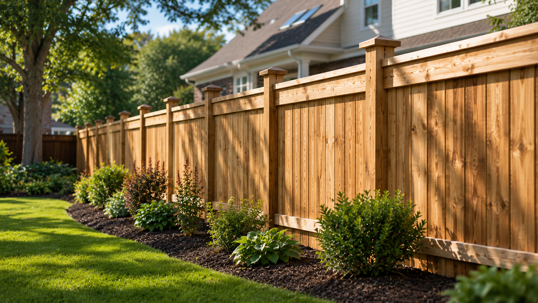
Still a popular choice for classic privacy fencing and garden fences, wood holds up well here as long as it's properly sealed and resealed every couple of years. Pressure-treated pine is the standard, with cedar as a pricier but more rot-resistant upgrade. Picket-style wood fencing also remains a common request for front yards and gardens, where full privacy isn't the goal but a defined boundary and a classic look are.
Vinyl Fencing
Vinyl has gained ground steadily because it shrugs off Missouri's humidity and temperature swings without the maintenance demands of wood. No staining, no sealing, and strong resistance to the kind of moisture-driven wear that wood eventually shows.
Chain Link Fencing
Still the practical choice for budget-conscious security or pet containment. It's not the most attractive option, but it's durable, low-maintenance, and handles wind well, which matters during Missouri's storm season. It also tends to be the fastest material to install, which can matter if you're working against a deadline like a new pet arriving or a property sale closing.
Pool Fencing
Pool fencing has its own set of safety-driven requirements, often tied to specific code standards around height and self-latching gates, regardless of which material is chosen.
What Actually Drives Fence Pricing in This Market
Two quotes for what sounds like a comparable fence can land far apart, and a handful of specific factors usually explain why. Material grade is the most obvious one — pressure-treated pine costs less than cedar, and standard chain link costs less than a privacy-style vinyl fence of the same length. Footing depth matters too, since proper depth for Missouri's freeze-thaw cycle takes more labor and material than a shallower installation, even though the difference isn't visible once the fence is finished.
Gate count and any custom elements, like a wider double-gate for equipment access or decorative post caps, add both material and labor cost. Soil conditions can factor in as well, since some St. Charles County neighborhoods sit on heavier clay that requires wider or deeper footings than sandier or better-draining soil elsewhere in the area. A quote that's noticeably lower than others without explaining footing depth or material grade is worth a second look before signing.
The Installation and Repair Process
Consultation and property walk, identifying property lines, grade, drainage, and any existing structures that affect layout.
Utility marking, completed before any digging starts.
Permitting, covered below.
Post setting, with footing depth adjusted for the area's freeze-thaw cycle and specific soil conditions.
Panel, rail, or chain link installation, followed by gate fitting and hardware checks.
Final walkthrough, where a good contractor explains maintenance specific to your material and confirms gate operation before leaving.
For repair work specifically — storm-damaged fencing, post repair, or general wear — the process starts with an honest assessment of whether a section can be repaired or whether full replacement makes more sense long-term. A contractor who automatically pushes full replacement without explaining why a repair won't hold is worth a second opinion, and a contractor willing to walk the fence line with you and point out exactly what's failing and why is generally one worth trusting with the work.
Questions Worth Asking Before You Sign a Contract
A handful of questions tend to reveal more about a contractor's actual process than reviews alone ever will. Ask how they determine footing depth for your specific yard, and whether that's based on actual soil conditions or a standard depth used regardless of the property. Ask whether permitting is something they handle on your behalf or something you're expected to manage yourself, since that affects both your timeline and how much falls on you directly. And ask what happens if a post shifts or a panel loosens within the first year, specifically whether that falls under warranty labor or gets treated as a brand new service call with its own charge.
These answers tend to separate a contractor who's thought through the specifics of your property from one quoting a generic per-foot price without much consideration for what your yard actually needs.
Local Permitting and Regulations Around Saint Charles
Permit requirements differ depending on whether your property falls in St. Charles, St. Peters, O'Fallon, or unincorporated St. Charles County, each with its own fence height limits and setback rules. Many neighborhoods in this area are also governed by HOAs with their own material and style restrictions, which can be stricter than municipal code, particularly for front-facing fences. Checking both your specific municipality's permitting office and your HOA's guidelines before committing to a design avoids having to redo work later. A reputable local contractor should already know the general permitting process for each of these jurisdictions and can flag likely requirements before you even apply, which saves a step in an otherwise slow process.
Fence Maintenance Worth Building Into Your Routine
Upkeep needs vary by material, and skipping it shortens lifespan more than most homeowners realize. Wood fencing in this climate benefits from resealing roughly every two to three years given Missouri's humid summers and real winter freeze cycles, both of which wear down sealant faster than a milder climate would. Gate hardware deserves an annual check regardless of fence material, since freeze-thaw movement can gradually loosen hinges and latches over a few seasons without it being obvious until a gate stops closing properly.
Vinyl and chain link need less hands-on care, but a check after a particularly severe winter or a major storm is still worth doing, mainly to confirm posts haven't shifted and that nothing loosened during high winds. Catching a slightly leaning post early is a far smaller fix than waiting until an entire section needs to be reset.
What Local Expertise Actually Looks Like
A fence contractor who's worked across St. Charles County for years has already adjusted footing depth and material choice for this region's freeze-thaw cycle and storm exposure. They know which neighborhoods have clay-heavy soil that needs deeper or wider footings, and they've already navigated the permitting differences between St. Charles, St. Peters, and O'Fallon. That's the actual value of hiring locally instead of a contractor unfamiliar with this specific area's conditions.
Repair Versus Replacement After Storm Damage
Storm damage doesn't automatically mean a full fence replacement, even though that's the assumption a lot of homeowners start with. A leaning section that didn't actually snap can often be reset, especially if the footing underneath is still intact. Posts that have rotted at the base or splintered from impact usually need full replacement at that specific point, regardless of how the rest of the fence looks.
Whether full replacement makes more sense than a series of repairs often comes down to the fence's age going into the storm. A newer vinyl fence with one damaged panel is a quick, isolated fix. A wood fence that's already fifteen years old and took storm damage on top of years of weathering might genuinely make more financial sense to replace outright, since additional sections are likely to need attention soon regardless. A contractor who lays out that tradeoff honestly is one worth trusting with future repairs.
What Local Expertise Looks Like Day to Day
This isn't an abstract idea, it's specific decisions made on the ground. It's knowing that a particular neighborhood in St. Peters has heavier clay soil that needs deeper footings than a similar-looking yard a few miles away. It's understanding the different permitting timelines between St. Charles, St. Peters, and O'Fallon well enough to set realistic expectations upfront instead of promising a date that depends on approvals outside anyone's control. It's recognizing which hardware grades hold up through Missouri's humidity and freeze-thaw cycle versus which ones look fine in a showroom but loosen within a couple of seasons. None of that shows up in a sales pitch, but it's what separates a fence that holds up for a decade from one that needs constant adjustment.
Seasonal Timing for Fencing in Saint Charles
Early summer is generally a solid window for fence installation here, with the ground dried out from spring rains and before the most intense heat and humidity of July and August set in. It's worth scheduling sooner rather than later in the season, since storm-damaged fence repairs tend to spike after severe weather moves through, which can push back installation timelines for new projects already in the queue. Crews dealing with a backlog of storm repairs after a rough spring often have less flexibility for new installation scheduling once summer storm activity picks up further, so getting on the calendar early tends to pay off.
Frequently Asked Questions About Hiring a Fence Contractor in Saint Charles
How much does a new fence cost in Saint Charles?
Costs vary by material and length, with chain link generally the most budget-friendly option and vinyl or larger privacy fence projects running higher, with most residential jobs falling within a range that depends on yard size and material choice.
How deep do fence posts need to be in Missouri's climate?
Post depth needs to account for the area's freeze-thaw cycle, generally requiring deeper footings than a milder climate would, with the exact depth depending on local frost line standards and soil type.
Who repairs storm-damaged fences near me in Saint Charles?
Several local contractors handle storm damage repair, including Stand Strong Fencing of Saint Charles, which assesses and repairs wind and storm-damaged fencing throughout St. Charles, St. Peters, and O'Fallon.
Do I need a permit to install a fence in Saint Charles?
In most cases yes, though exact requirements depend on your specific municipality and any applicable HOA, so confirming with your local building department before installation is worth the extra step.
What's the most durable fence material for Missouri's weather?
Vinyl and chain link both handle Missouri's humidity, freeze-thaw cycles, and wind exposure well with minimal maintenance, while wood requires more regular upkeep to maintain the same lifespan.
Can a damaged fence section be repaired instead of fully replaced?
Often yes, particularly for isolated post damage or storm-related breaks, though the right call depends on the overall condition and age of the rest of the fence.
How deep should fence posts be for a pool enclosure in this area?
Pool fence posts still need to account for the region's freeze-thaw cycle the same as any other fence, but the bigger factor with pool fencing is usually meeting minimum height and self-latching gate requirements set by local code.
Will my HOA have different rules than the city's fence code?
Often yes, and HOA rules can be more restrictive than municipal code, particularly around material and visibility from the street, so checking both before finalizing a design avoids having to make changes later.
About the Author
Drake Harris owns and operates Stand Strong Fencing of Saint Charles, serving homeowners and businesses across St. Charles, St. Peters, and O'Fallon with both installation and repair services. His team works across wood, vinyl, aluminum, and chain link, handling everything from a fresh garden fence to pool fencing and storm damage repair, with a focus on craftsmanship that holds up to Missouri's actual weather rather than just looking good at installation. That includes giving homeowners a straightforward read on repair versus replacement after storm damage, rather than defaulting to whichever option costs more.
If you're weighing fence options for a Saint Charles property and want a straight answer about what'll hold up long-term, reach out through standstrongfencing.com/saint-charles-mo.
We build across St. Charles County and into north county, including St. Peters, O’Fallon, Wentzville, Lake Saint Louis, and Dardenne Prairie. Ask us these questions yourself when you book a free onsite estimate.