


If you own property in West Chester, PA—whether it’s a working farm, a hobby property, or a home with a large yard—you’ve likely faced one common challenge: how to properly protect your land.
The solution usually comes down to fencing. But not all fencing serves the same purpose.
Two of the most common (and often confused) options are farm fencing and deer fencing. While they may seem similar at a glance, they are designed for very different goals.
Understanding the difference can help you make the right investment—and avoid costly mistakes.
The Purpose: Containment vs. Exclusion
The biggest difference between farm fencing and deer fencing is simple:
- Farm fencing is built to keep animals in
- Deer fencing is built to keep animals out
Farm fencing focuses on controlling livestock—horses, cattle, goats, or sheep—within a defined area. It’s about management, safety, and efficiency.
Deer fencing, on the other hand, is designed to prevent intrusion. Its goal is to protect landscaping, crops, and property from wildlife damage—especially from persistent deer populations common in Chester County.
Why This Matters in West Chester
In this area, it’s not unusual for property owners to need both types of protection.
- Farms need secure enclosures for livestock
- Homes and gardens need protection from deer browsing
- Larger properties may deal with both livestock management and wildlife pressure
Choosing the wrong type of fence—or using a one-size-fits-all solution—can lead to failure on both fronts.
Farm Fencing: Built for Strength and Function
Farm fencing is designed to handle pressure from animals that push, lean, and test boundaries.
Common Features:
- Strong posts and secure anchoring
- Materials designed for impact and tension
- Heights based on livestock type (not wildlife)
- Flexible configurations for pastures and rotation
Common Types:
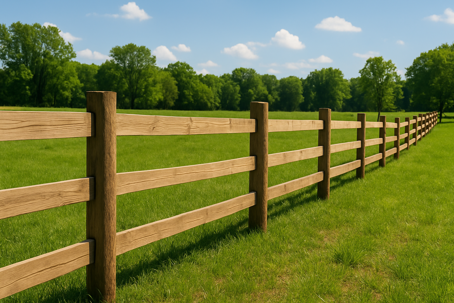
- Wood fencing (popular for horses)
- Woven wire or field fencing
- High-tensile wire systems
- Electric fencing (standalone or supplemental)
Farm fencing is all about control and durability. It must hold up against daily use and animal behavior.
Deer Fencing: Built for Height and Deterrence
Deer fencing operates on a completely different principle.
Deer don’t push—they jump.
That means the fence must be designed to stop them from attempting entry in the first place.
Common Features:
- Tall height (typically 7–8 feet or more)
- Tight spacing with no gaps at ground level
- Lightweight but strong materials
- Designed to be visually discouraging
Common Types:
- Poly (mesh) deer fencing
- Metal or wire deer fencing
- Framed systems for residential use
The goal is deterrence, not resistance. If a deer believes it can’t easily clear or navigate the fence, it will move on.
Can One Fence Do Both Jobs?
This is one of the most common questions—and the answer is:
Sometimes, but not always effectively.
A standard farm fence (like a 4–5 foot wire fence) will not stop deer. They will jump it easily.
A deer fence may not be strong enough—or properly configured—to contain livestock safely.
In some cases, a combined system works best:
- Perimeter deer fencing for exclusion
- Interior farm fencing for livestock management
This layered approach provides both protection and control.
Common Problems We See
Property owners often call after trying a quick fix that didn’t work. The most common issues include:
- Fences that are too short to stop deer
- Gaps at the bottom that allow entry
- Weak materials that fail under livestock pressure
- Poor installation leading to sagging or failure
Fencing is one of those investments where doing it right the first time matters.
Choosing the Right Fence for Your Property
The right solution depends on a few key factors:
- Are you trying to contain animals, exclude wildlife, or both?
- What type of animals are involved?
- How large is your property?
- What level of durability and maintenance do you want?
- Is visibility or appearance a concern?
A small backyard garden will require a very different solution than a multi-acre farm.
Why Professional Installation Makes a Difference
Both farm fencing and deer fencing require precision.
- Posts must be set correctly for long-term stability
- Tension must be properly applied
- Terrain must be accounted for
- Weak points must be eliminated
A fence is only as strong as its installation. Even the best materials will fail if installed incorrectly.
The Bottom Line
If you’re in West Chester and dealing with livestock, deer, or both, the right fencing solution can make a huge difference in how you manage and protect your property.
- Farm fencing gives you control
- Deer fencing gives you protection
- The right combination gives you peace of mind
Ready to Protect Your Property?
If you’re not sure which type of fencing is right for your property, you don’t have to figure it out alone.
Stand Strong Fencing provides expert guidance, custom solutions, and professional installation tailored to your land and your needs.
Reach out today for a free estimate and take the first step toward securing your property the right way.