


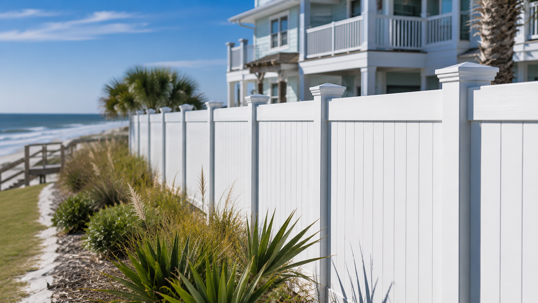
Coastal fencing is its own animal. A fence company that's never installed near saltwater air doesn't always know that, and you find out the hard way two summers later when hardware starts rusting and a wood fence that looked fine at installation starts cupping and graying faster than it should. The Grand Strand's combination of salt exposure, high humidity, and an active hurricane season makes this market genuinely different from fencing work done even just an hour inland.
I've installed and repaired fences all over the Myrtle Beach area, from the Market Common down through Surfside Beach and up toward North Myrtle Beach, and the questions homeowners ask me are pretty consistent. What material actually holds up here. How much should this cost. What's the real difference between companies that all claim to do the same thing.
So let's get into it.
Why Coastal Conditions Change the Fencing Equation
Myrtle Beach sits in a specific climate zone that most fencing advice online doesn't account for. Salt air corrodes standard hardware faster than it would inland, which means screws, hinges, and post brackets need to be rated for coastal exposure or they'll show rust within a year or two. Humidity stays high for most of the year, which accelerates wood rot if the lumber wasn't properly treated or if the fence design doesn't allow enough airflow at the base. And then there's hurricane season, which runs roughly June through November here, meaning any fence installed in this region needs to be engineered to handle real wind load, not just look good on a calm day.
A fence company without specific coastal experience might use standard inland materials and installation methods that simply don't hold up to a Myrtle Beach summer, let alone a tropical storm.
Breaking Down the Main Fence Materials
Wood Fencing
Wood remains popular for its classic look and relatively lower upfront cost. Pressure-treated pine is the standard choice locally, and proper sealing or staining is non-negotiable here given the humidity. Cedar holds up better against rot naturally but costs more. Either way, wood fencing in this climate needs a maintenance routine that homeowners in drier regions often don't have to think about.
Vinyl Fencing
Vinyl has become a strong choice for coastal properties specifically because it doesn't rot, doesn't rust, and doesn't need repainting or sealing. The upfront cost is higher than wood, but the lower long-term maintenance often makes up for it within a handful of years, especially for homeowners who don't want to deal with annual upkeep.
Aluminum Fencing
Aluminum is a strong option for pool enclosures and properties wanting an open, decorative look without sacrificing security. It's naturally rust-resistant, which makes it a smart fit for this climate, and it tends to hold up well against coastal wind without the maintenance demands of wood.
What Actually Drives Fence Pricing on the Coast
Two quotes for what sounds like a similar fence project can land far apart, and a few specific factors usually explain it. Material grade matters most — pressure-treated pine costs less than cedar, and standard vinyl panels cost less than heavier-gauge, wind-rated vinyl systems built to handle coastal gusts. Hardware grade is another major factor that's easy to overlook. Stainless steel or coated hardware rated for coastal exposure costs more upfront than standard hardware, but it resists the salt corrosion that causes standard screws and brackets to rust and fail within a couple of years here.
Fence height and any decorative elements, like lattice tops or custom gate designs, add labor and material cost as well. And footing depth plays a role too, since a fence engineered to handle real hurricane-season wind load requires deeper, more substantial post footings than a decorative fence in a calmer climate would need, which adds labor time but is not optional if you want the fence to survive a serious storm season intact.
What to Expect During a Fence Installation
Property assessment and consultation. A real assessment includes walking the property line, discussing material options based on your specific yard and home, and noting any drainage or grading issues that could affect post stability.
Utility marking. Before any digging starts, utility lines need to be marked to avoid hitting underground gas, water, or electrical lines.
Permitting, when required, which we'll get into below.
Installation, typically taking one to three days depending on the length of the fence line and the material chosen.
Final walkthrough, where the crew should show you gate operation, hardware care, and anything specific to your material that affects long-term upkeep.
Warranty registration, so there's a clear record of what's covered if an issue comes up later.
Pool Fencing and Gate Code Considerations
A meaningful share of fencing calls in Myrtle Beach involve pool enclosures, and these come with their own specific code requirements beyond general fence regulations. Most jurisdictions in the area require pool fencing to meet a minimum height, typically at least four feet, along with self-closing and self-latching gate hardware positioned high enough to be out of easy reach for small children. These requirements exist for genuine safety reasons, and a contractor unfamiliar with pool fencing code specifically can install something that looks fine but fails an inspection or, worse, doesn't actually function as intended in an emergency.
Material choice for pool fencing also deserves extra thought given the coastal climate. Aluminum is a common choice here because it resists corrosion from pool chemicals and salt air simultaneously, while still allowing visibility into the pool area, which is often a code requirement in itself. Vinyl can work as well, though gate hardware still needs to meet the same self-latching standard regardless of fence material.
Local Permitting and Regulations Around Myrtle Beach
Permitting requirements vary depending on which municipality your property falls under, since the Myrtle Beach area includes a mix of city limits and unincorporated Horry County land, each with its own rules. Fence height restrictions are common, particularly for front yards versus backyards, and pool enclosures often have specific code requirements tied to safety standards. HOA approval is a separate hurdle in many of the area's planned communities and golf course neighborhoods, and HOA rules can be stricter than the municipal code itself regarding material, height, and color. It's worth confirming both your local permitting office and your HOA's architectural review process before finalizing material choice.
Local Neighborhoods We Proudly Serve
Our crews regularly work throughout Myrtle Beach, Surfside Beach, North Myrtle Beach, the Market Common area, Carolina Forest, and Conway, along with the surrounding unincorporated parts of Horry County.
What Local Expertise Looks Like Day to Day, Not Just on a Brochure
This isn't an abstract idea, it shows up in real decisions made on the job. It's knowing that a particular stainless hardware grade actually resists this coastline's salt air, while a similar-looking standard hardware option will show rust within eighteen months. It's recognizing that a property near the Market Common with sandier soil needs a different footing approach than one further inland in Carolina Forest with heavier clay content. It's a crew scheduling installation with hurricane season timing in mind rather than treating every month of the year the same. None of that shows up in a sales brochure, but it's exactly what separates a fence that holds up through multiple storm seasons from one that needs major repair after its first.
What Local Expertise Actually Looks Like
A fencing company that's worked this specific coastline for years knows which hardware grades actually resist salt corrosion versus which ones just claim to. They know how local soil composition, which tends to be sandy in a lot of areas near the beach, affects post-setting depth and whether concrete footings need adjustment compared to inland installations. That kind of knowledge only comes from having installed hundreds of fences specifically in this climate, not from general fencing experience somewhere else in the country.
Maintenance That Actually Matters in a Coastal Climate
Routine upkeep looks different here than it does inland, and skipping it costs more in this climate than people expect. Wood fencing needs resealing roughly every two to three years, sometimes sooner depending on sun and salt exposure, since UV and humidity break down sealant faster near the coast. Hardware should get a visual check at least once a year, looking specifically for early rust spots on screws, hinges, and brackets, since catching corrosion early is far cheaper than replacing a section after a hinge fails completely.
Vinyl and aluminum require less hands-on maintenance, but they're not entirely maintenance-free. A periodic rinse to remove salt residue helps preserve the finish on both materials, and it's worth checking aluminum fence posts and gate hardware after any major storm to make sure nothing shifted or loosened from wind stress, even if the fence looks fine at a glance.
Seasonal Considerations for Fencing in Myrtle Beach
Early summer is one of the better windows for fence installation here, before hurricane season ramps up into its more active stretch later in the summer and fall. Ground conditions are generally workable, and getting a fence installed and properly cured before peak storm season gives wood sealant and post-setting concrete time to fully set under stable conditions. If you're planning a fence project this year, scheduling sooner rather than later in the season can help you avoid weather delays once tropical systems start moving through more frequently.
Repair Versus Replacement After Storm Damage
Storm damage doesn't always mean a full fence replacement, though plenty of homeowners assume it does. A section that's leaning from wind but didn't actually snap can sometimes be reset and re-secured, particularly if the footing itself is still intact. Posts that have rotted at the base, on the other hand, usually need full replacement rather than a patch repair, since the structural integrity at that point is compromised regardless of how the panel above it looks.
The honest answer often depends on the fence's age and overall condition heading into the storm. A five-year-old vinyl fence with one damaged section is a straightforward repair. A fifteen-year-old wood fence that took storm damage on top of years of humidity-related wear might make more financial sense to replace outright rather than repair piecemeal, since additional sections are likely to fail soon after anyway. A contractor who explains that tradeoff honestly, rather than defaulting to the most expensive option, is one worth trusting with future work.
Frequently Asked Questions About Hiring a Fence Company in Myrtle Beach
How much does a new fence cost in Myrtle Beach?
Costs vary widely by material and fence length, but wood fencing typically runs lower per linear foot than vinyl or aluminum, with most residential projects in the area falling somewhere between a few thousand dollars and significantly more depending on yard size and material.
What's the best fence material for coastal properties?
Vinyl and aluminum tend to perform best long-term in coastal conditions because they resist rust and rot, though well-maintained pressure-treated wood can still hold up with proper sealing and regular upkeep. The right choice often comes down to how much ongoing maintenance you're realistically willing to commit to versus a higher upfront cost for a lower-maintenance material.
Who installs fences near me in Myrtle Beach?
Several fencing companies operate in the area, including Stand Strong Fencing of Myrtle Beach, which installs and repairs wood, vinyl, and aluminum fencing throughout Myrtle Beach, Surfside Beach, and North Myrtle Beach.
Do I need a permit to install a fence in Myrtle Beach?
It depends on your specific municipality and HOA, since requirements vary across Horry County's incorporated and unincorporated areas, so it's worth checking with your local permitting office and HOA before installation.
How does hurricane season affect fence installation timing?
Fences installed before hurricane season ramps up generally have more time to properly cure and set, which is part of why late spring and early summer are popular windows for installation in this region. Installing during the peak of an active storm stretch is still possible, but it can mean more careful attention to wind forecasts around the installation date itself.
How long does a wood fence last in a coastal climate like Myrtle Beach?
A well-treated and properly maintained wood fence can last ten to fifteen years in this climate, though that lifespan depends heavily on consistent sealing and how much direct salt air and humidity exposure the fence receives.
Does my fence need to be wind-rated for hurricane season?
If you're in an area exposed to direct coastal wind, a properly engineered fence with adequate footing depth handles storm season far better than a standard inland design, and it's worth asking your contractor directly about wind load rating before installation.
How often should fence hardware be inspected in this climate?
At least once a year is a reasonable baseline, with an additional check after any major storm, since salt air accelerates corrosion on lower-grade hardware faster than most homeowners expect.
About the Author
Matthew Eckert owns and operates Stand Strong Fencing of Myrtle Beach, where the team handles everything from new fence installation to comprehensive repair work across the Grand Strand. Whether it's a classic wood fence, a low-maintenance vinyl option, or a more robust aluminum enclosure, the focus stays on durable craftsmanship that's built to handle this specific coastal climate, not just look good on installation day. That same attention extends to repair work, where the team prioritizes giving homeowners an honest read on whether a damaged section can be fixed or whether it's genuinely time to replace, rather than defaulting to whichever option costs more.
If you're weighing fence materials for a Myrtle Beach property and want a straight answer about what'll actually hold up, reach out through standstrongfencing.com/myrtle-beach-sc.