


March is the best time for fence inspections in Argyle. Check for post movement, panel misalignment, moisture damage, rust spots, and coating wear before spring storms arrive. If you see leaning sections or surface deterioration, contact experienced fence installation companies or trusted local fence companies to prevent structural issues and extend your fence’s lifespan.
If you live in Argyle, March is your window of opportunity. Before spring storms and Texas heat set in, a proactive fence inspection can protect your investment and prevent avoidable structural problems. Reputable fence installation companies recommend early spring inspections because North Texas soil shifts after winter moisture. A careful review now can save thousands in long-term replacement costs and preserve curb appeal heading into peak outdoor season.

Why March Matters in Argyle, TX
Argyle’s clay-heavy soil expands during wet months and contracts when temperatures rise. That natural movement affects fence posts more than most homeowners realize. Even professionally installed systems can shift slightly as the ground adjusts.
By March, the soil has typically absorbed winter moisture but hasn’t yet faced intense summer heat. This makes it the ideal time to assess stability. Many local fencing companies report that small alignment issues caught in early spring prevent larger structural failures by late summer.
A fence inspection is not just about appearance. It’s about ensuring long-term performance in a climate that challenges materials year-round.
Step-by-Step March Fence Inspection Guide
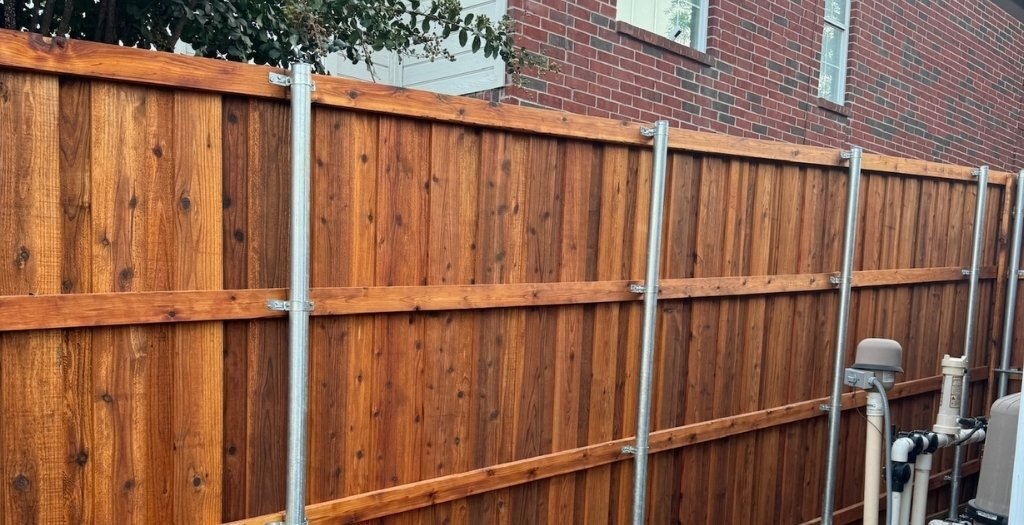
A proper inspection should take 30–60 minutes depending on yard size. Walk the full perimeter and observe carefully.
1. Test Post Stability
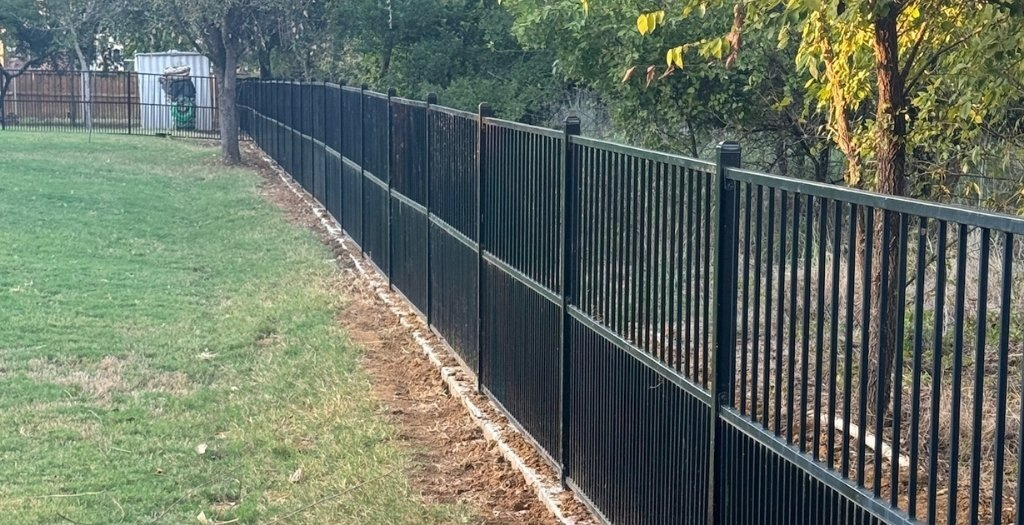
Fence posts are the structural foundation. Gently apply pressure to each post. It should feel solid, not loose or wobbly. Minor movement may signal soil expansion or improper compaction.
Experienced commercial fencing contractors and local fence companies typically install posts 24–36 inches deep in North Texas soil. If posts feel unstable, professional evaluation is recommended before the next heavy rain.
2. Check Panel Alignment
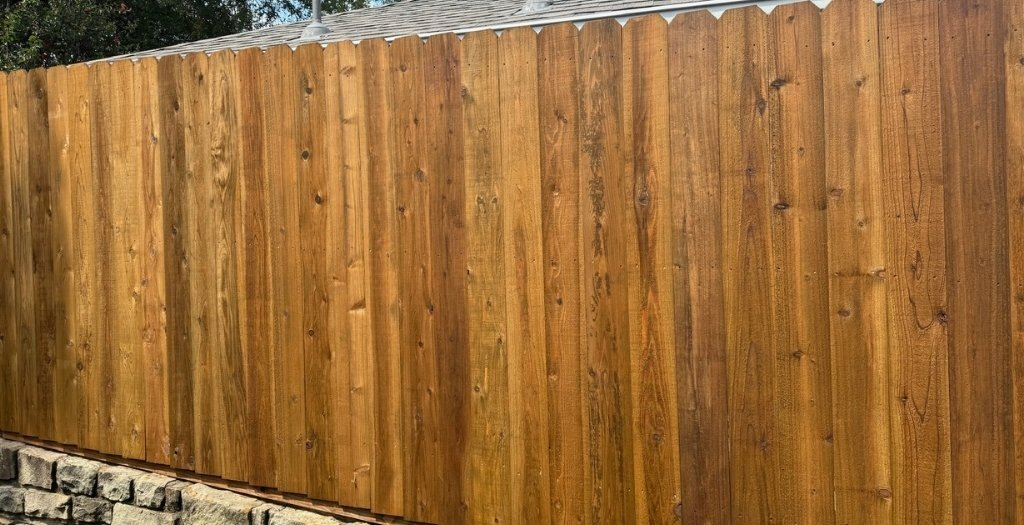
Stand at one end of your fence and look down the line. A straight visual line indicates structural integrity. Uneven spacing, sagging panels, or visible leaning suggests shifting.
This is important for all materials. Misalignment often starts small. Catching it early prevents pressure from building across sections.
3. Inspect Based on Fence Material
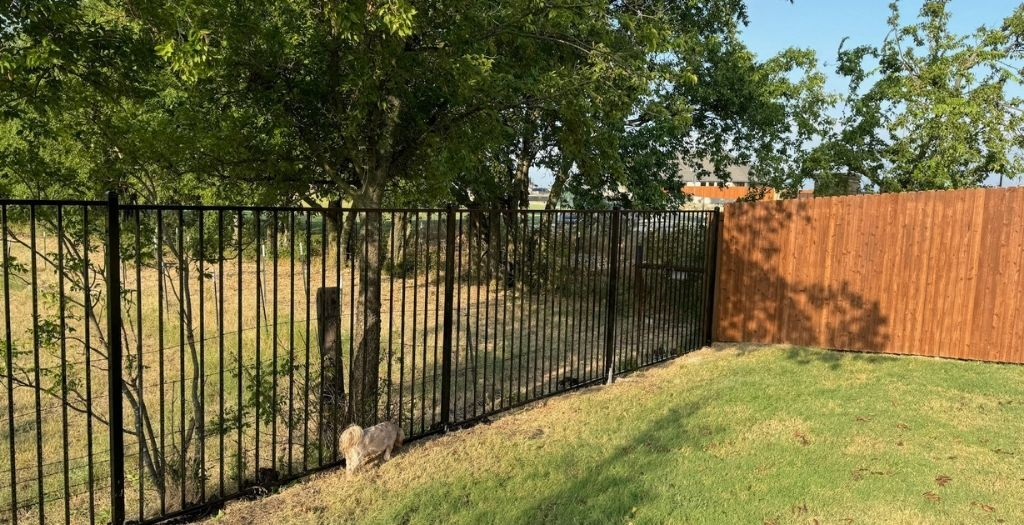
Different materials require different inspection approaches.
Wood Fencing
Wood fencing reacts to moisture and temperature more than other materials. Look for discoloration, surface cracks, or fading sealant. If the protective coating appears worn, scheduling a professional fence staining service can significantly extend lifespan.
A reputable fence staining company ensures even application and proper absorption before summer heat intensifies.
Vinyl and PVC Fencing
High-quality vinyl fencing installation and pvc fence installation are designed for durability, but inspect joints and brackets for separation. Temperature fluctuations can cause minor expansion and contraction.
If you notice panel gaps or shifting, consult experienced vinyl fence contractors or a reliable vinyl fence company for professional assessment.
Aluminum and Wrought Iron
With aluminum fence installation, examine the powder coating for scratches. Aluminum resists rust, but deep surface damage should be addressed promptly.
For wrought iron fencing, check for early rust spots. Surface corrosion spreads faster in humid spring conditions if untreated.
Chain Link Fencing
Modern commercial chain link fence systems are galvanized or vinyl-coated for longevity. Inspect tension wires and ensure the mesh remains tight.
If sagging appears, contact professional chain link fence installers or qualified chain link fence contractors to evaluate structural tension.
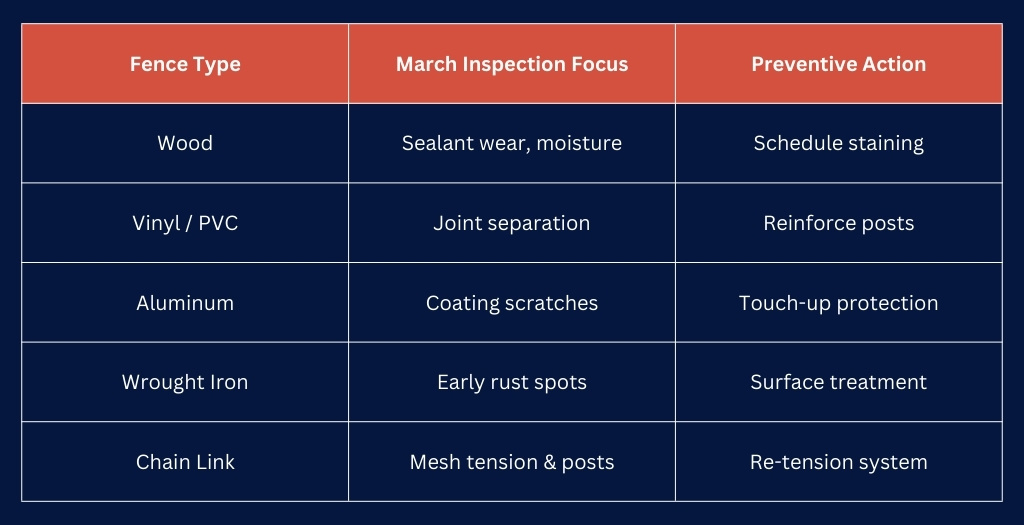
Fence Inspection Comparison Table
Why Installation Quality Directly Impacts Inspection Results
Many March inspection problems stem from improper installation. Experienced fence installation companies understand wind load calculations, soil depth requirements, and drainage considerations unique to Argyle.
Some homeowners choose a reputable commercial fence company even for residential projects because commercial-grade installation standards often increase long-term durability.
The difference between minor seasonal adjustment and major structural movement usually comes down to installation precision.
Common Inspection Mistakes Argyle Homeowners Make
Many homeowners assume that low-maintenance fences require no attention. Even durable options like a metal privacy fence or professionally completed PVC fence installation benefit from annual evaluation.
Common mistakes include:
- Ignoring slight leaning
- Delaying protective staining
- Overlooking small rust spots
- Waiting until summer heat worsens minor issues
A 30-minute inspection in March can prevent structural stress across the entire fence line.
Long-Term Value of Annual March Inspections
Properly installed systems can last decades:
- 20–30+ years with quality vinyl fence installation
- 25+ years with professional aluminum fence installation
- 20+ years for commercial chain link fence
- 10–20 years for wood maintained by a trusted wood fence company
Annual inspections protect that lifespan. Preventive attention reduces replacement costs and maintains property value.
Why Argyle Homeowners Choose Stand Strong Fencing
When it comes to protecting your property in Argyle, you don’t just need a fence, you need one built to handle North Texas soil, spring storms, and long-term exposure to heat and moisture. That’s where Stand Strong Fencing stands apart. Their team brings local expertise, precision installation standards, and material-specific knowledge to every project, whether it’s vinyl fence installation, aluminum fence installation, a durable commercial chain link fence, or a custom build from a trusted wood fence company.
March inspections are about prevention—but quality installation is what delivers lasting performance. Stand Strong Fencing focuses on correct post depth, proper concrete curing, accurate alignment, and structural durability designed specifically for Argyle conditions. That attention to detail translates into fewer issues, longer lifespan, and greater peace of mind.
Spring-Ready Fencing Solutions from Stand Strong Fencing
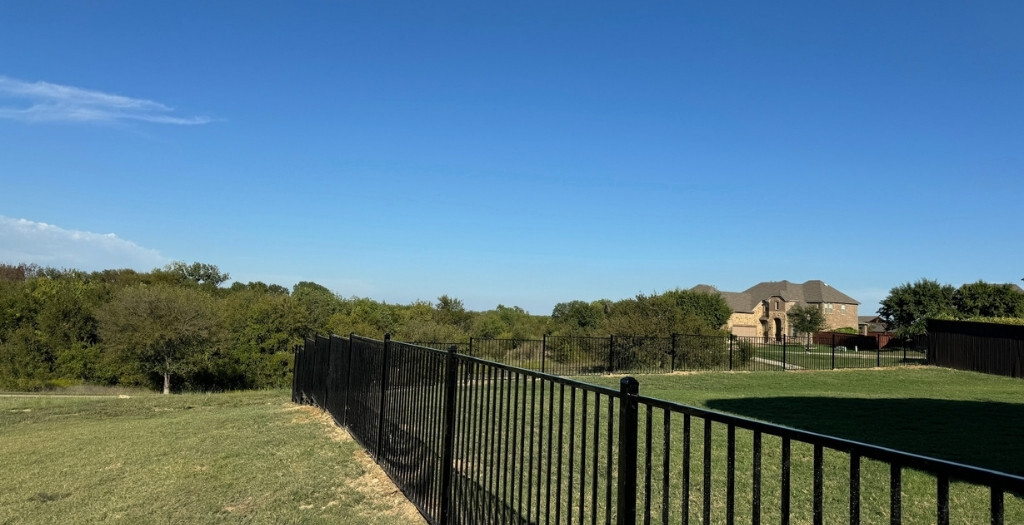
As March sets the stage for spring in Argyle, proactive fence inspection is more than a maintenance task; it’s a strategic investment in your property’s long-term durability and value. Small alignment issues, early rust spots, or surface wear may seem minor today, but under Texas heat and storm pressure, they can quickly escalate into costly structural problems. By taking action now, homeowners protect not only their fence but also their curb appeal, security, and peace of mind.
Stand Strong Fencing brings local expertise, precision installation standards, and material-specific knowledge tailored specifically to North Texas soil conditions. Whether you need a professional inspection, preventive maintenance, repairs, or a brand-new installation, their team is committed to craftsmanship that truly stands the test of time. Schedule your consultation with Stand Strong Fencing today and move into spring confident that your fence is built to stand strong season after season.

Frequently Asked Questions
Why is March the best month to inspect my fence in Argyle?
March is ideal because it follows the winter moisture cycle but comes before peak spring storms and summer heat. Argyle’s clay soil expands when wet and contracts as it dries, which can affect post stability. Inspecting in March allows homeowners to detect shifting, alignment changes, and surface wear before severe weather increases structural stress.
Do low-maintenance fences like vinyl or aluminum still require inspection?
Yes. While vinyl fence and aluminum fence are considered low maintenance, they are not maintenance-free. Post stability, panel alignment, and surface coatings should still be evaluated annually. Even durable systems can shift due to soil movement or extreme weather, especially in North Texas conditions.
How long should a professionally installed fence last in Argyle?
Lifespan depends on material and installation quality. A professionally installed commercial chain link fence can last 20+ years. Quality vinyl fence installation often lasts 20–30 years or more. Aluminum systems may exceed 25 years. Wood installed by experienced wood fence contractors can last 10–20 years when maintained with regular professional staining.
How do I protect my fence from storm damage?
North Texas storms can bring strong winds and heavy rain. Ensuring posts are securely anchored and checking for loose boards or panels before storm season helps prevent damage. Trimming nearby tree branches reduces impact risk. After major storms, inspect for leaning sections or soil erosion around posts and address issues promptly.
What maintenance mistakes should homeowners avoid?
Common mistakes include delaying small repairs, neglecting sealing schedules for wood fences, allowing vegetation to grow against panels, and ignoring rust spots on metal fencing. These issues may seem minor but can accelerate structural deterioration. Consistent, preventative care is always more affordable than major repairs.