


For Argyle homeowners, dogs aren't just pets, they're family. But when the zoomies hit or a squirrel makes a run for it, your fence is the only thing standing between your dog and the street. At Stand Strong Fencing, we've installed hundreds of backyard fences built specifically for dog owners, and this guide covers what actually works: the best materials, the details that stop escapes, and how to choose the right setup for your dog's personality.
Why Dogs Try to Escape and How to Design Around It
Before picking a material, it helps to understand what you're actually building against:
- Curiosity: Another dog, a passerby, or a squirrel is often all it takes.
- Boredom or loneliness: Long hours alone lead to digging, climbing, and testing boundaries.
- Fear or anxiety: Thunderstorms and fireworks can send even a calm dog over (or under) a fence.
- Hunting instinct: A rustle in the bushes is an invitation some dogs can't resist.
Once you know your dog's specific triggers, you can build a dog-friendly fence that actually addresses them instead of a generic barrier.
Best Fence Materials for Dog Owners in Argyle
Wood Privacy Fencing
A solid wood privacy fence blocks the visual triggers, passing cars, other animals, neighbors that set off barking and escape attempts. It's a strong mid-range investment: affordable to install, easy to repair, and it adds resale value. Choose pressure-treated wood or cedar for rot and pest resistance, and go at least 6 feet tall for larger or more athletic dogs.
Vinyl Fencing
Vinyl fencing gives you a smooth, climb-resistant surface with no splinters, no gaps to slip through, and no rot or warping to worry about in Argyle's heat. It's a popular upgrade for owners of agile dogs specifically because there's nothing for claws or paws to grip.
Chain Link Fencing
Chain link fencing is the budget-friendly, durable option, especially for large yards and active breeds. On its own, it's not always escape-proof, so most Argyle dog owners add privacy slats to reduce visual triggers, a buried mesh or concrete footer to stop digging, and a vinyl coating for weather resistance.
Aluminum Fencing
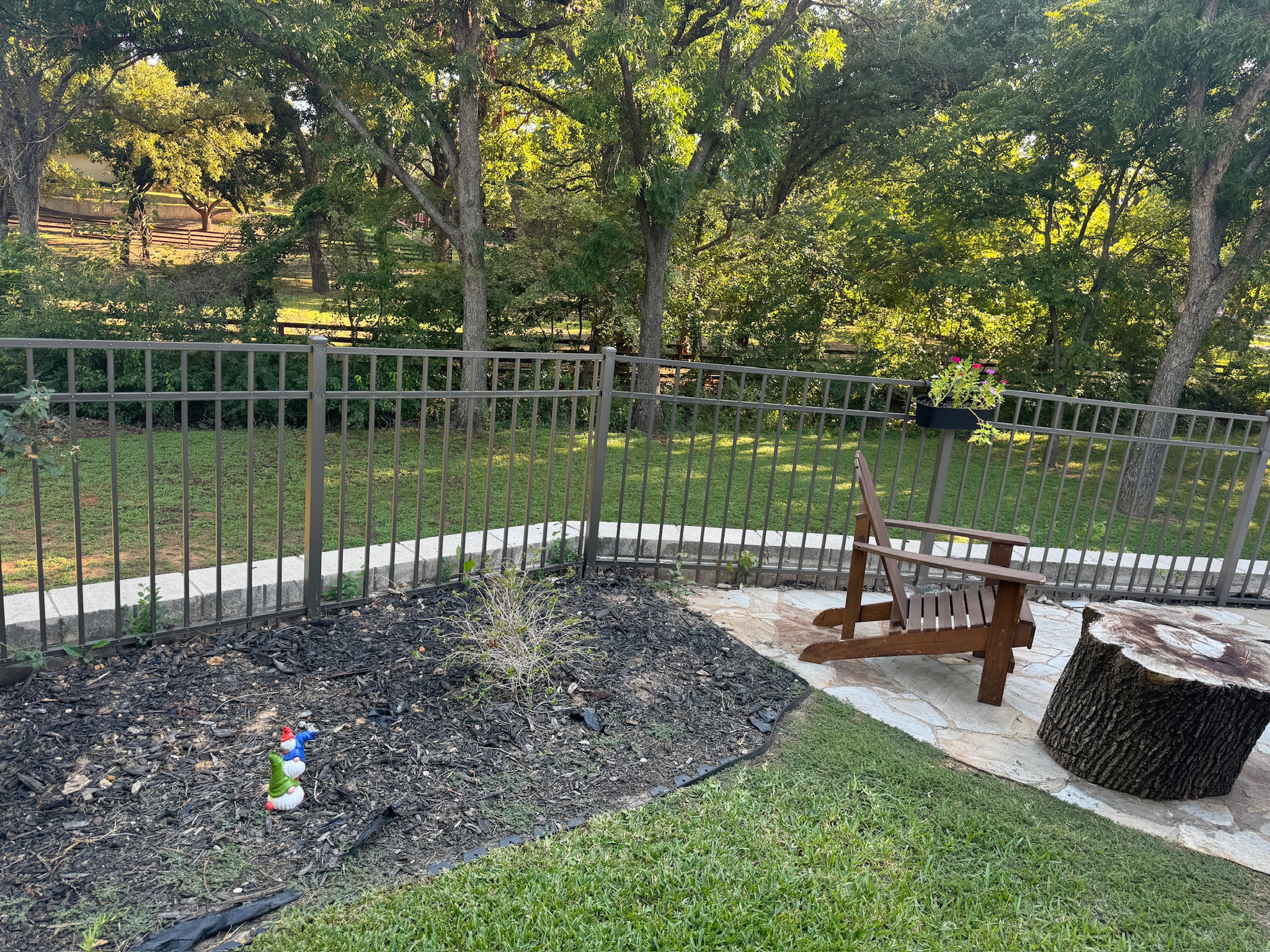
Aluminum fencing offers strength and curb appeal without rust, useful for Argyle's humid stretches, and works well for larger yards or HOA-restricted front yards. Because it's see-through, it's best suited to dogs that aren't determined escape artists; "puppy picket" spacing (extra-tight bars near the bottom) can be added to stop smaller dogs from squeezing through.
Ornamental Steel Fencing
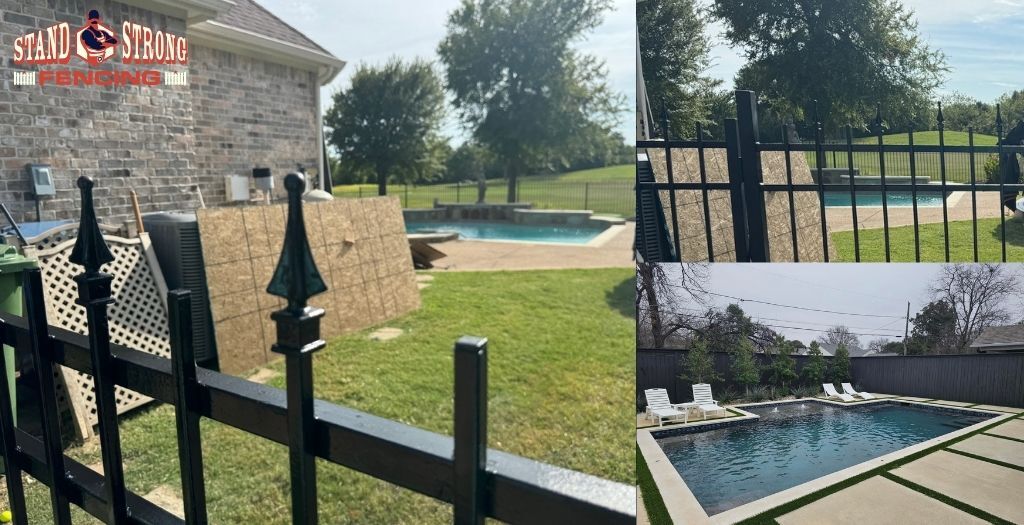
Ornamental steel fencing combines strength with a decorative, upscale look. For dog owners, the key is spacing: keep vertical bars no more than 3 inches apart, and add mesh or acrylic panels behind the bars for smaller dogs. Anchoring the bottom securely also prevents digging underneath.
Making Any Fence Escape-Proof
Material is only half the equation, these upgrades close the gaps a determined dog will find:
- Add a dig guard. Bury the fence line 6–12 inches or reinforce it with concrete or wire mesh.
- Install coyote rollers. Spinning bars along the top stop dogs (and wildlife) from getting a grip to climb over.
- Secure every gate. Self-closing, self-latching hardware removes the weakest point in most yards.
- Match height to your dog. Small dogs are often fine at 4 feet; large or athletic breeds usually need 6–8 feet.
- Use landscaping as a second layer. Shrubs or raised planters along the base discourage both digging and jumping.
Key Features Every Dog Fence Should Have
Regardless of material, look for:
- Height matched to your dog's size and jumping ability (4–6+ feet)
- No gaps or weak spots where a dog could squeeze through or dig under
- Self-closing, self-latching gates
- Materials rated for both weather and wear from an enthusiastic dog
Custom and Hybrid Options
No two dogs are the same, some jump, some dig, some test every inch of a fence line. For high-energy or multiple dogs, custom builders in Argyle often recommend wood-and-metal hybrid designs, double fencing systems, underground dig barriers, or self-closing gates layered on top of a standard fence. A custom approach costs more upfront but solves problems a stock fence often can't.
Dog-Friendly Fencing in Argyle at a Glance
The best fence materials for dog owners in Argyle, TX are wood privacy fencing, vinyl, chain link with upgrades, aluminum, and ornamental steel. Wood and vinyl block visual triggers best; chain link is the most budget-friendly with added dig guards and privacy slats; aluminum and ornamental steel suit calmer dogs and HOA-restricted yards. Fence height should match the dog's size (4–8 feet), and dig guards, coyote rollers, and self-latching gates close the gaps a determined dog will otherwise find.
Why Choose Stand Strong Fencing
At Stand Strong Fencing, we design every dog fence around the dog, not just the yard. Whether that means puppy-picket spacing on an aluminum fence, a buried dig guard under chain link, or a full custom hybrid design, our team builds for your dog's specific habits and Argyle's climate and HOA requirements. When you're ready for a fence that actually keeps your dog safe, we're the local team that knows how to build it.
Frequently Asked Questions
What is the best fence type for a dog that jumps?
A 6–8 foot wood privacy or vinyl fence works best, since solid panels remove the visual cues that trigger jumping and give nothing for paws to grip.
How do I stop my dog from digging under the fence?
Bury a dig guard 6–12 inches deep, or reinforce the base with concrete or wire mesh along the fence line.
Is chain link fencing safe for dogs?
Yes, with upgrades. Adding privacy slats, a buried footer, and secure gates makes chain link a durable, budget-friendly option for active dogs.
What fence height do I need for a large dog?
Most large or athletic breeds need 6 to 8 feet of fence height to prevent jumping or climbing over.
Are aluminum or ornamental steel fences safe for small dogs?
Yes, when spaced correctly. Keep vertical bars under 3 inches apart, or add puppy-picket spacing or mesh panels to prevent small dogs from squeezing through.