


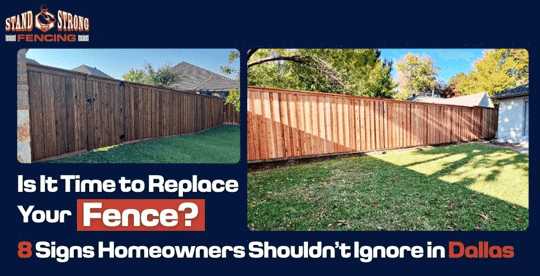
A fence does more than outline your property. It protects your privacy, secures your backyard, enhances your curb appeal, and increases long-term property value. In Dallas, however, fences take a beating. Strong winds, intense heat, soil movement, and seasonal storms can all speed up wear and tear. Even a high-quality wood fence or metal fence eventually reaches a point where repairs are no longer effective.
If you are unsure whether your fence needs a full replacement or just a targeted fix, this guide will help you identify the red flags. These are the eight most common signs Dallas homeowners should never overlook.
1. Leaning, Sagging, or Unstable Fence Sections
A fence should stand straight, secure, and firm. If sections of your fence are leaning or sagging, it signals deeper structural problems.
Why this happens in Dallas
- Soil expansion and contraction during hot and dry seasons
- Heavy winds pushing aging structures
- Posts rotting underground due to moisture pockets
- Loose or eroded concrete footings
When the posts lose their stability, the entire fence weakens. A slight tilt might seem harmless, but it will worsen quickly during the next severe storm. In many cases, replacing the affected section or the full fence is more cost-effective than repairing each loose post again and again.
2. Extensive Wood Rot or Moisture Damage
For wood fences, rot is one of the clearest signs that replacement is overdue. Rot spreads quietly and affects both visible boards and hidden structural components.
Common causes
- Repeated rain and sun cycles
- High humidity during storm seasons
- Poor drainage around the fence line
- Soil contact with untreated wood
If you can poke a screwdriver into the wood with minimal resistance, the structural integrity is already compromised. Rotting boards cannot support pressure, and replacing a few planks will not stop the spread. A full fence replacement becomes the safer and stronger long-term solution.
3. Severe Discoloration, Warping, or Splitting
Dallas summers bring intense UV exposure that breaks down the fibers in wood and impacts the finish of metal or steel fences. Warping boards, deep cracks, and permanent discoloration often indicate that your fence has exceeded its service life.
How to identify the problem
- Boards that twist or curve
- Wide gaps between planks
- Splits running through the length of the wood
- Fading that cannot be restored with staining
A fence that is cosmetically damaged often has underlying structural issues too. This reduces curb appeal and weakens overall durability.
4. Recurring Repairs That No Longer Hold
Many homeowners patch their fence each season, replacing a few posts or boards at a time. While this approach works early on, it becomes inefficient when:
- Repairs fail to last more than a few months
- New problems keep appearing in different areas
- Hardware loosens repeatedly
- Hinges or latches no longer align
- Panels detach even after reinforcement
When fence service costs accumulate and the fence still struggles to stay stable, replacing it entirely is both practical and cost-efficient. A new fence brings structural consistency that old patched fences cannot achieve.
5. Damage from Storms, High Winds, or Hail
Dallas weather can be unpredictable. Storm seasons often bring strong winds, heavy rainfall, and hail that can compromise even well-built fences.
Signs of storm-related damage
- Sections blown down
- Split or cracked boards after hail impact
- Metal fences bending or denting
- Posts shifting due to saturated soil
- Panels detaching from rails
While some isolated damage can be fixed, widespread storm impact is a strong indicator that replacement is the safest option. A weakened fence becomes a safety hazard during future storms and can expose your yard to unwanted entry.
6. Pest Infestations That Spread Through Structural Components
Termites, carpenter ants, and other wood-boring pests are common in Texas. Once they enter your fence, they can create hollow sections, destroy support beams, and weaken the entire structure.
Warning signs
- Sawdust at the base of fence posts
- Tiny holes or tunnels
- Wood that flakes or crumbles
- Visible insects or wings near the structure
If pests have infiltrated multiple sections, replacing the entire fence prevents further spread and gives you the chance to install treated lumber resistant to future infestations.
7. Fence No Longer Provides Privacy or Security
A fence’s role extends beyond aesthetics. It protects your property, pets, and family. If it no longer serves these functions, it is time to consider a full replacement.
Common indicators
- Gaps between boards widen over time
- Broken or missing planks create clear sightlines
- Loose posts make the fence unsafe
- Tall fences sink, reducing height and coverage
A fence that fails to secure your yard invites unwanted exposure and reduces your home’s comfort. Replacing it restores privacy and strengthens property boundaries.
8. Outdated or Worn Appearance That Reduces Curb Appeal
Your fence contributes to your home’s exterior identity. When it looks outdated, worn, or mismatched with the rest of your property, it impacts curb appeal and perceived value.
Signs your fence is past its visual prime
- Stains no longer penetrate
- Wood looks grey or washed out
- Paint chips repeatedly
- Style no longer matches your home’s architecture
A new fence brings a modern look, stronger structure, and better long-term durability, making it a worthwhile investment.

Why Timely Replacement Matters in Dallas Homes
Replacing a failing fence protects more than your backyard. It safeguards your property, prevents ongoing repair costs, and strengthens safety during storm seasons.
Benefits of timely replacement
- Stronger resistance to Dallas weather patterns
- Improved curb appeal
- Higher property value
- Better privacy and security
- Reduced long-term repair expenses
- An opportunity to upgrade to more durable materials
Whether you choose wood, vinyl, composite, or metal, a new fence enhances both function and appearance.
How to Decide Between Repairing and Replacing
Before committing to replacement, evaluate the following questions:
- Are more than 25 percent of the boards damaged?
- Are multiple posts loose, leaning, or rotten?
- Do repairs fail to address the root cause?
- Does the fence compromise safety?
- Has storm or pest damage spread across sections?
If the answer to more than one question is yes, replacement is the smarter move.
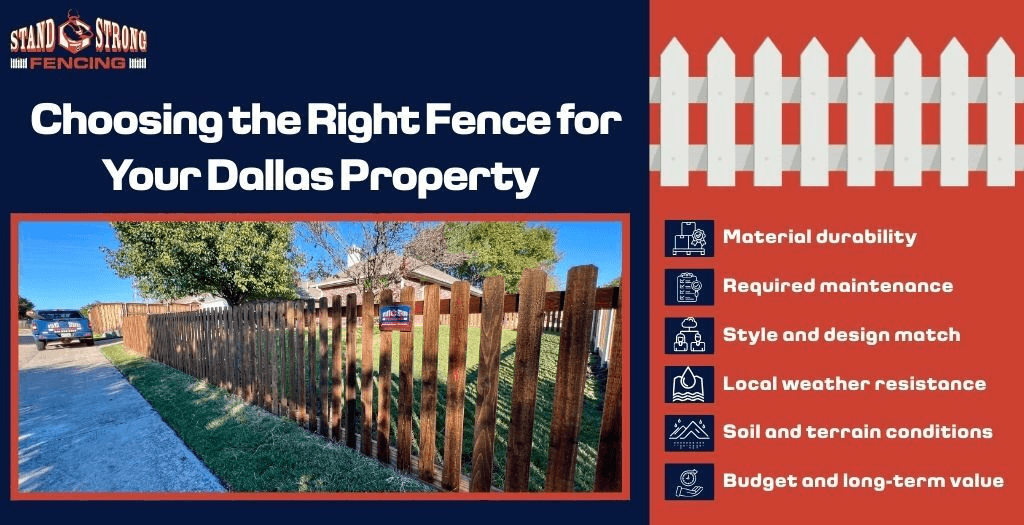
Choosing the Right Fence for Your Dallas Property
Once you decide to replace your fence, consider:
- Material durability
- Required maintenance
- Style and design match
- Local weather resistance
- Soil and terrain conditions
- Budget and long-term value
A well-designed replacement fence reduces future maintenance, withstands local climate conditions, and enhances your home’s overall appeal.
Conclusion
A fence that shows clear signs of structural weakness or extensive damage is more than a maintenance issue. It becomes a safety concern, a curb-appeal setback, and a long-term cost burden.
If you notice leaning posts, rotting wood, warped panels, storm damage, or recurring repairs, your fence is ready for a complete upgrade. Investing in a solid, well-built fence gives your home renewed strength, privacy, and value for years to come.

FAQ
1. How long does a typical wood fence last in Dallas?
Most wood fences in Dallas last 12 to 20 years depending on weather exposure, maintenance, soil conditions, and the quality of lumber used. Extreme temperatures, storms, and high humidity often shorten the lifespan.
2. Should I repair or replace a fence with rotting boards?
If only a few boards are damaged, repairs may work. If rot appears on posts, rails, or multiple sections, replacement is usually more cost effective and safer for your property.
3. What are the signs my fence posts are failing?
Leaning fences, wobbly posts, soil separation, frequent shifting, and standing water around the base indicate compromised posts that often require full replacement.
4. Can storm damage weaken my fence even if it looks fine?
Yes. High winds can loosen fasteners, shift posts underground, or crack rails. Hidden structural weakness can cause collapse later, so a professional inspection is important after heavy storms.
5. What type of fence lasts the longest in Dallas weather?
Metal and vinyl fences tend to offer a longer lifespan under Dallas heat and storm conditions. If you prefer wood, cedar performs better than pine due to natural resistance to insects and moisture.
6. How much does a fence replacement typically cost in Dallas?
Costs depend on material, linear footage, labor, and removal of old fencing. Homeowners in Dallas generally spend between 3500 and 8500 for full replacement.