Fence Staining in Winston-Salem
Personalized Protection for Residential & Commercial Wood Fencing
A carefully selected stain protects wood fencing while bringing out the grain, color, and character that make the material appealing. Stand Strong Fencing of Greater Winston Salem provides fence staining for residential and commercial properties in Winston-Salem and the surrounding service area, with color choices tailored to each property and owner’s preferences.
We use premium quality stains to complement the fence and the property around it. Whether the goal is a natural appearance or a more defined color, we can identify an option that achieves the desired look without hiding the qualities of the wood.
Call (336) 551-1731 to request a free, no-obligation estimate for fence staining in Winston-Salem.
How Fence Staining Protects Wood
Wood remains exposed to sunlight, rain, humidity, and changing temperatures throughout the year. Fence staining helps protect it against moisture, weather elements, and UV rays that can affect its appearance and long-term condition.
Regular stain application also preserves the fence’s beauty and strength. The finish highlights the natural wood grain, refreshes weathered color, and supports curb appeal without covering the surface in an opaque layer.
A maintained finish can help guard the wood against:
- Moisture exposure: Stain limits the amount of water absorbed by the prepared wood surface.
- UV exposure: The finish protects against sunlight that can fade and discolor wood.
- Weathering: Routine staining supports the fence’s condition as it faces outdoor elements.
General Steps in a Fence Staining Project
Successful staining depends on the condition of the wood before the finish is applied. Although each fence has different needs, the process generally begins with evaluating the surface and choosing a finish suited to the wood and the property owner’s goals.
Evaluate the Wood & Select a Finish
The fence should be checked for moisture, surface wear, biological growth, and areas requiring attention. Finish selection considers the wood species, current condition, desired color, and amount of visible grain.
Clean & Prepare the Surface
Dirt and loose debris must be removed before application. Mildew and algae should also be addressed so the new finish reaches a properly prepared surface rather than sitting over buildup.
Apply the Stain
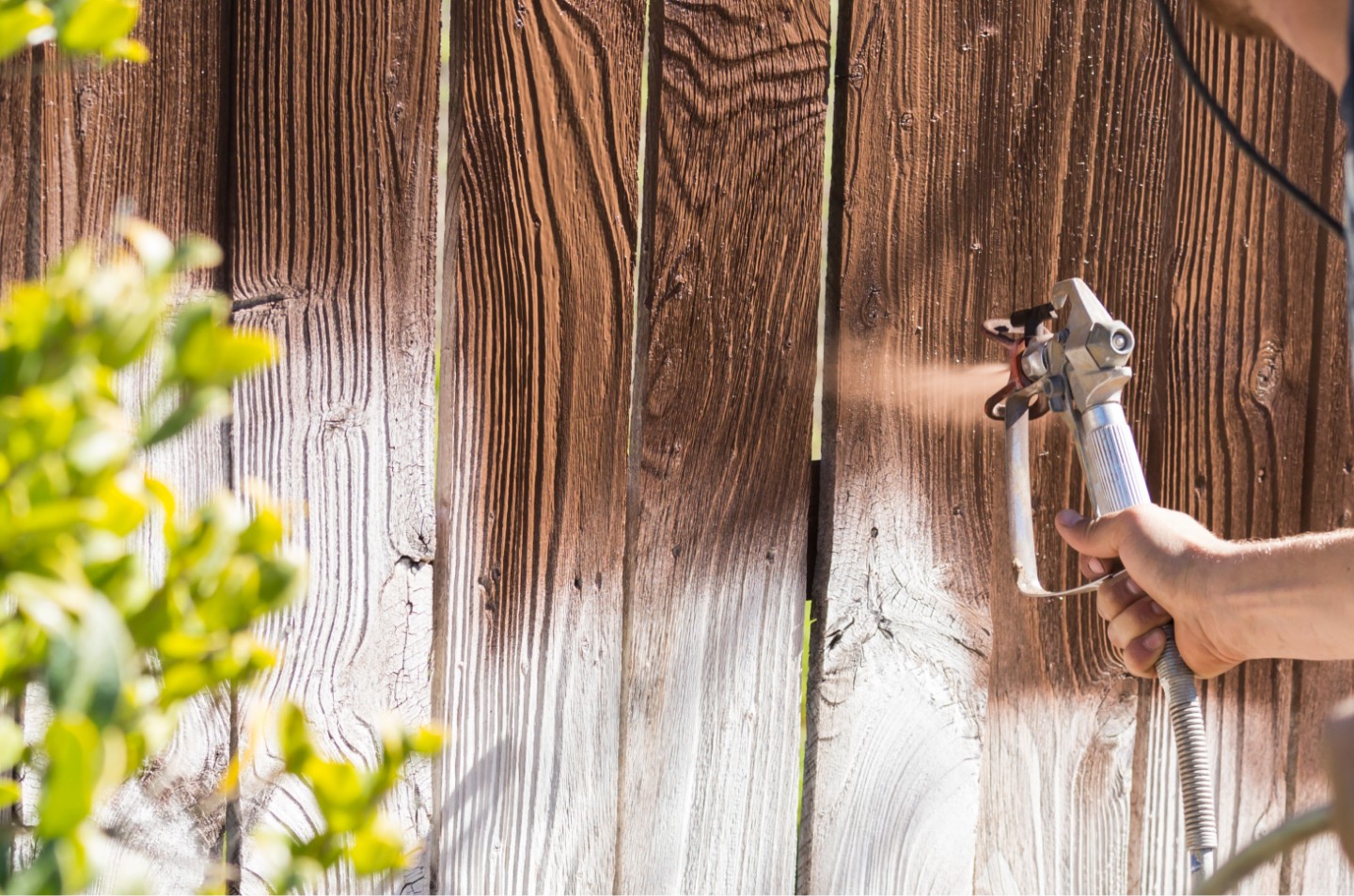
After preparation, the stain can penetrate or cover the wood as intended for the product. Coverage and absorption vary based on the fence’s age, porosity, previous finish, and moisture level.
Maintain the Protective Finish
Wood sealing or re-staining renews protection after the fence has been cleaned and prepared. Maintenance between applications makes it easier to identify fading, water exposure, mildew, or movement before the next staining cycle.

-
"Did what they said they would do, at the price they quoted, on the day they said they would be there. You really can't beat that these days."- Steve Keogh
-
"Awesome experience. Fast service and very responsive. Highly recommended."- Brian Davis

Stain vs. Paint for Wood Fences in Winston-Salem
We recommend stain rather than paint for wood fences in the Greater Winston-Salem climate. Stain penetrates the wood fibers and is less likely to peel in humid conditions, while paint forms a surface layer that can lift or flake as moisture affects the wood beneath it.
Stain also allows more of the wood’s natural texture to remain visible. Transparent stain preserves more of the original appearance, while solid stain provides greater color coverage.
Recommended Staining Intervals
Wood fences in this climate generally benefit from sealing or staining every two to three years. Transparent stains typically need attention sooner than solid stains because they provide less pigment and coverage.
The right interval depends on the fence’s conditions. Strong sun exposure can fade a finish more quickly, while sprinkler overspray and proximity to soil can increase moisture contact. Checking the color, water absorption, and surface condition regularly helps determine when maintenance is due.