


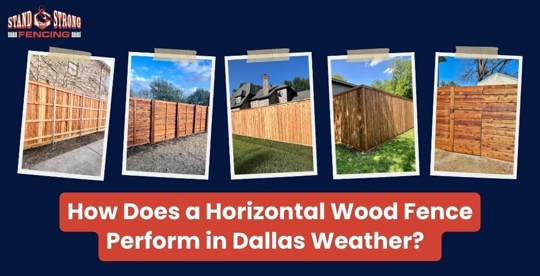
A horizontal wood fence brings clean lines and modern appeal, but Dallas weather tests every exterior structure. This blog explains how a horizontal wood fence performs through heat, storms, humidity, and seasonal shifts common in Dallas. You will learn about material behavior, moisture response, durability, upkeep needs, and lifespan expectations, along with practical guidance on choosing the right wood and construction approach for long term outdoor performance.
Why Dallas Weather Matters for Horizontal Wood Fence Performance
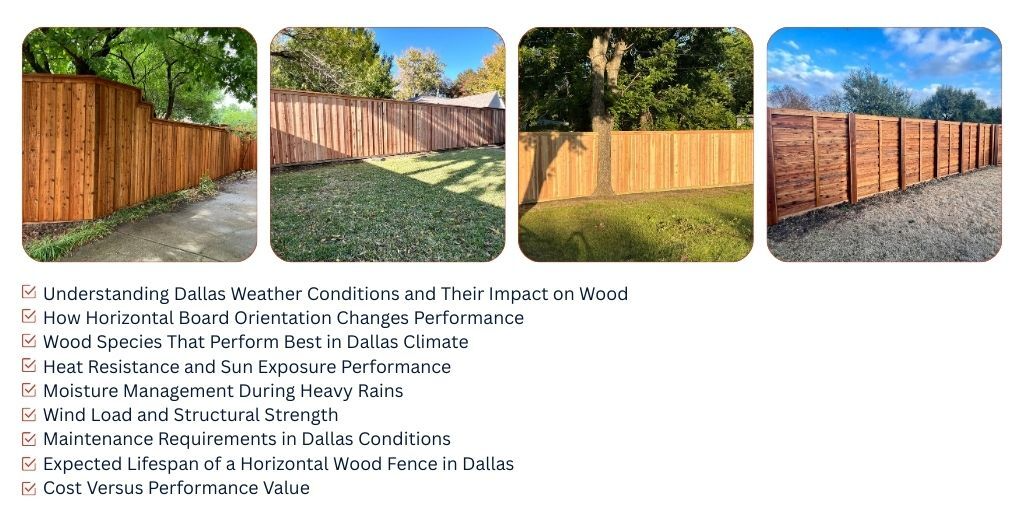
A horizontal wood fence has become a preferred choice for homeowners who want a modern exterior with natural warmth. Clean lines, wider boards, and a strong curb presence make it stand apart from traditional vertical fencing styles. However, design appeal alone does not decide long term success. In a city like Dallas, weather conditions play a major role in how any fence ages and performs.
Dallas experiences intense summer heat, sudden storms, high humidity cycles, and mild but fluctuating winters. These conditions directly affect wood movement, moisture retention, and surface wear. This blog explores how horizontal wood fencing performs under these conditions, what risks homeowners should understand, and how proper planning and care can significantly extend fence life.
Understanding Dallas Weather Conditions and Their Impact on Wood
Dallas weather places consistent stress on outdoor wood structures. Summers often bring extended periods of high heat, with temperatures regularly crossing triple digits. Heat dries out wood fibers, causing shrinkage and surface cracking if the wood is not properly treated.
Storm seasons introduce heavy rainfall and humidity spikes. Moisture absorption leads to swelling, while rapid drying afterward can cause warping. Occasional winter cold fronts create temperature swings that force wood to expand and contract repeatedly. A wood fence must be built to accommodate this natural movement without losing alignment or strength.
How Horizontal Board Orientation Changes Performance
Horizontal board placement behaves differently than vertical layouts. Boards span longer distances between posts, which means they carry more load and experience more visible movement when wood expands or contracts. This makes spacing, fastening methods, and post depth more important for structural balance.
When installed correctly, horizontal wood fencing performs well in Dallas conditions. Reinforced framing and closer post spacing help boards remain straight even during heat waves. Poor installation, however, can lead to sagging or uneven lines over time.
Wood Species That Perform Best in Dallas Climate
Not all wood reacts the same way to Dallas weather. Cedar is one of the most reliable options due to its natural resistance to moisture, insects, and decay. Redwood offers similar benefits but comes at a higher cost and limited availability in Texas.
Pressure treated pine is widely used for horizontal wood fence installation in Dallas TX because it is budget friendly and treated to resist rot. However, it requires strict sealing and maintenance to avoid twisting or surface splitting. Choosing kiln dried lumber also reduces moisture related movement after installation.
Upgrade your property boundary with a well planned wood fence.

Heat Resistance and Sun Exposure Performance
Direct sun exposure is one of the toughest challenges for a horizontal wood fence in Dallas. UV rays break down surface fibers, leading to fading and surface roughness. Horizontal boards receive more even sun exposure, which can actually help with consistent aging if protected properly.
Using UV resistant stains or sealants slows discoloration and reduces drying damage. Lighter stain shades reflect more heat and help maintain surface stability. Without protective coatings, even high quality wood can lose strength faster under prolonged sun exposure.
Moisture Management During Heavy Rains
Moisture control is critical for horizontal wood fencing. Rainwater tends to sit longer on flat board edges if drainage gaps are not properly planned. This can lead to localized swelling or mildew growth.
Proper spacing between boards allows airflow and drainage, helping the wood dry evenly after storms. Slight board angling and raised ground clearance prevent water pooling at the base. When moisture is managed correctly, horizontal fences handle Dallas rain cycles effectively.
Wind Load and Structural Strength
Dallas storms often bring strong wind gusts. Horizontal fencing acts like a continuous panel, which can catch wind pressure if not properly reinforced. Deep set posts and solid framing help distribute wind force across the structure.
Using steel post inserts or reinforced wooden posts adds strength without altering the fence appearance. When wind resistance is planned from the start, horizontal wood fencing maintains alignment even during seasonal storms.
Install a horizontal wood fence built for Dallas weather.

Maintenance Requirements in Dallas Conditions
Maintenance is unavoidable with any wood fence, but horizontal layouts require consistent care to protect their clean lines. Annual inspections help catch early signs of warping, loose fasteners, or surface wear.
Reapplying sealant every two to three years protects against moisture intrusion and sun damage. Cleaning debris from board gaps prevents trapped moisture. With routine care, horizontal wood fencing maintains both strength and appearance despite challenging weather cycles.
Expected Lifespan of a Horizontal Wood Fence in Dallas
With proper materials, professional installation, and ongoing maintenance, a horizontal wood fence in Dallas can last 15 to 20 years or longer. Cedar and redwood often exceed this range with consistent sealing.
Lower grade materials or skipped maintenance shorten lifespan significantly. Warping, rot, and fastener failure often trace back to moisture exposure or improper spacing. Investing in quality upfront reduces long term repair costs.
Cost Versus Performance Value
While horizontal wood fencing may cost more upfront than traditional styles, its performance value comes from longevity and design impact. Proper construction reduces repair frequency, while the visual appeal supports property value.
Homeowners who prioritize both function and aesthetics often find horizontal fencing designs worth the investment when paired with climate appropriate materials.
Invest in a horizontal wood fence built for Dallas weather.

Conclusion
A horizontal wood fence can perform exceptionally well in Dallas weather when designed with climate realities in mind. Heat, moisture, and wind all influence how wood behaves, but these factors can be controlled through smart material choices, proper spacing, reinforced framing, and routine maintenance. When installed correctly, horizontal wood fencing offers a reliable balance of modern appearance and long term outdoor performance. For Dallas properties, preparation and craftsmanship make all the difference.
FAQs
1. Is a horizontal wood fence suitable for Dallas heat?
Yes, a horizontal wood fence can handle Dallas heat when built with heat resistant wood and protective finishes. High temperatures mainly affect untreated or poorly sealed boards. Using quality stains reduces drying and surface cracking. Proper spacing also helps wood adjust naturally to temperature changes.
2. Does humidity affect horizontal wood fencing more than vertical fencing?
Humidity affects all wood fences, but horizontal layouts need careful moisture planning. Longer board spans can swell if drainage gaps are not included. With correct spacing and airflow, horizontal wood fencing manages humidity effectively. Regular sealing further reduces moisture absorption.
3. What wood type lasts longest in Dallas weather?
Cedar is one of the longest lasting choices due to natural resistance to rot and insects. Pressure treated pine also performs well when sealed consistently. Kiln dried lumber offers better stability in fluctuating humidity. Material choice directly impacts lifespan.
4. How often should a horizontal wood fence be sealed in Dallas?
Sealing every two to three years is recommended for Dallas conditions. Sun exposure and rain both break down protective coatings over time. Regular sealing maintains color and structural integrity. Skipping this step leads to faster wear.
5. Can a horizontal wood fence withstand strong Dallas storms?
Yes, when built with reinforced posts and proper framing. Wind load distribution is critical for horizontal designs. Deep post setting and secure fasteners improve resistance. Professional construction greatly improves storm performance.
6. Does a horizontal wood fence warp more easily?
Warping risk increases with poor material quality or improper installation. High quality wood and correct spacing minimize movement. Horizontal fences perform reliably when moisture and heat expansion are managed. Maintenance plays a key role in prevention.
7. Is maintenance higher for horizontal wood fencing?
Maintenance is similar to other wood fences but more visible due to clean lines. Regular inspections keep boards aligned and finishes intact. Cleaning and sealing are essential. Consistent care protects both appearance and structure.
8. What affects the lifespan of a horizontal wood fence the most?
Material quality, installation method, and maintenance habits matter most. Dallas weather adds stress, but it is manageable with preparation. Moisture control and sun protection extend lifespan significantly. Skilled installation prevents early structural issues.