


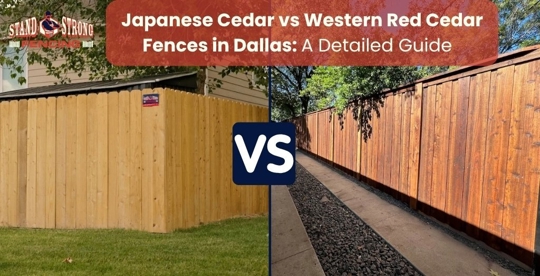
Japanese Cedar and Western Red Cedar are both strong choices for fencing in Dallas, but they differ in cost and maintenance. Japanese Cedar offers lower upkeep and long-term durability, while Western Red Cedar is more affordable and widely available, performing well with regular sealing. In Dallas heat, both outperform softer woods, making them ideal for residential fencing and commercial projects. This guide from Stand Strong Fencing helps homeowners choose the right option with practical, local insights.
Choosing the right wood for your fence matters more than most Dallas homeowners realize. Whether you're browsing options from local fence companies or ready to get a quote from a fence contractor in Dallas, TX, understanding the differences between Japanese Cedar and Western Red Cedar can save you time, money, and headaches down the road. This guide breaks it all down, from durability in the Texas heat to cost and aesthetics, so you can make a confident, informed decision.

Why Wood Fencing is Still #1 in Dallas
Before diving into the cedar comparison, it's worth understanding why wood privacy fencing remains the top choice for Dallas homeowners and businesses alike. Wood offers:
- Natural warmth and curb appeal that vinyl and aluminum simply can't replicate
- Custom heights, styles, stains, and finishes to match any property
- Cost-effectiveness compared to many alternative materials
- Sustainability, especially when responsibly sourced
Both Japanese Cedar and Western Red Cedar are premium choices in the wood fencing world, but they serve different needs. Let's look at what sets them apart.
Japanese Cedar Fence: Key Benefits & What Dallas Homeowners Should Know
Japanese Cedar, also known as Sugi, is a softwood native to Japan that has gained popularity among wood fence builders across the U.S. for its straight grain, consistent texture, and natural resistance to moisture.
Key Characteristics of Japanese Cedar :
Density & Hardness
These fences have moderate density, making it easy to work with during custom fence installation.
Moisture Resistance
Japanese cedar fence is naturally resistant to rot and decay, a major advantage in Dallas's unpredictable rain seasons.
Appearance
With a reddish-brown tone and a fine, even grain; these fences take stains beautifully.
Durability
With proper maintenance, these fences can last 20–30 years. It is also less susceptible to termites and rot, reducing long-term maintenance costs.
Is a Japanese Cedar Fence a Good Choice for Dallas's Climate?
Dallas homeowners need fencing materials that can handle long summers, intense sun exposure, and changing weather conditions throughout the year. A Japanese cedar fence is often chosen for its durability, natural beauty, and resistance to common outdoor wear, making it a popular option for premium residential fencing projects.
For homeowners looking for a high-quality wood fence, this fence can be a worthwhile investment due to its combination of durability and curb appeal.
Western Red Cedar Fence: A Proven Choice for Privacy Fencing
A Western Red Cedar fence has long been one of the most popular choices for residential fencing. Its natural beauty, durability, and resistance to the elements make it a reliable option for homeowners seeking a long-lasting privacy fence. Many installations use 1x6x8 cedar pickets, which are a standard choice for building strong, evenly spaced privacy fence panels with a clean and consistent look.
Key Benefits of Western Red Cedar Fence
Density
These fences are lightweight and easier to work with during installation.
Resistant to Damage
These fences naturally contain compounds that help resist rot and insect damage.
Appearance
Features a rich, warm appearance that can weather to a natural silver-gray over time.
Durability
Known for its dimensional stability and resistance to warping and twisting, it can last 15–30 years or more with proper care and maintenance.
How Western Red Cedar Performs in Dallas
A Western Red Cedar fence performs well in North Texas when properly maintained. Periodic staining or sealing can help preserve its color and protect it from prolonged sun exposure. Because it is widely available, many Dallas-area fence contractors recommend these fences for privacy fencing projects.
Japanese Cedar vs Western Red Cedar: Which is Better For Dallas Homeowners?
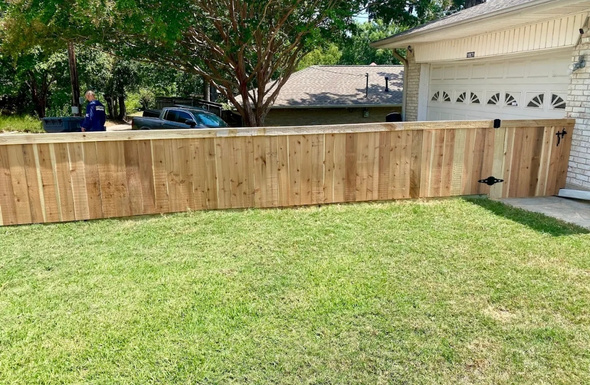

When comparing these fences, both materials offer excellent durability, natural resistance to decay, and attractive curb appeal. Japanese cedar is often selected for its premium appearance and stability, while western red cedar remains a popular choice due to its proven performance, availability, and long history in residential fencing. Japanese Cedar is also used in some fencing applications as an alternative cedar option, but Western Red Cedar remains the more common and widely available material among North Texas fence contractors. The best option ultimately depends on your budget, design preferences, and long-term maintenance goals.
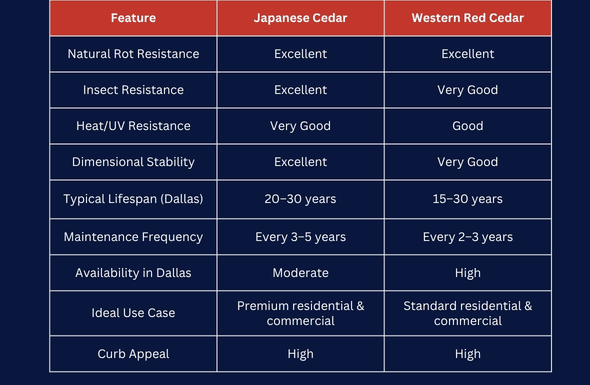
Japanese Cedar vs Western Red Cedar : A Comparison
Wood Fence Cost in Dallas: Quick Breakdown
Understanding wood fence cost helps you choose between Japanese Cedar vs Western Red Cedar fences in Dallas with clarity. Here’s a simple, easy-to-scan breakdown:
Average Fence Cost (Per Linear Foot)
- 6 ft Wood Fence Cost: $30 – $60+
- 8 ft Wood Fence Cost: $45 – $75+
Material Cost Differences
- Western Red Cedar Fence: Premium option with higher upfront cost, known for durability and natural rot resistance
- Japanese Cedar Fence: Mid-range pricing, often considered the best value wood fence for balance of cost and performance
Design Impact on Pricing
- Side-by-Side Privacy Fence: Most affordable and common option
- Board-on-Board Fence: Higher privacy fence cost due to added materials and layered design
- Upgrades (Top Cap, Trim, Kickboard): Increase fence installation cost but improve durability and appearance
What Affects Final Cost?
- Wood type (cedar vs pine)
- Fence height (6 ft vs 8 ft)
- Design complexity
- Add-ons and finishes
Stand Strong Fencing offers a transparent price for your fence project with no hidden costs while also guiding you towards the better fence choice.
Residential vs. Commercial Fence Installation in Dallas
Both cedars work well for residential fencing and commercial fencing, but the use case matters.
Residential Fencing
Wood privacy fencing in cedar is ideal for backyard privacy, pool enclosures, and decorative front yard fencing. Japanese Cedar is a premium option for homeowners wanting a lower-maintenance, long-lasting fence. Western Red Cedar is the go-to for affordable fencing that still delivers quality and beauty.
Commercial Fencing
Commercial fence installation with cedar is common for restaurants with outdoor seating, retail landscaping, and property perimeter screening. For commercial fencing near me searches in Dallas, Western Red Cedar is more widely stocked and typically faster to install at scale. Japanese Cedar works well for custom fence installation projects where aesthetics matter most, such as high-end business properties.
How to Choose Between Japanese Cedar and Western Red Cedar
In addition to consulting with a local fencing company, you can decide the best fence choice for your property based on these aspects:
- Budget: If upfront cost is a priority, Western Red Cedar wins. If you're optimizing for 20+ years of ownership, Japanese Cedar may save money overall.
- Fence Maintenance: Japanese Cedar requires less frequent upkeep.
- Fence Purpose: Is it privacy, decorative, commercial boundary? Decide your fence choice accordingly.
- Availability: Western Red Cedar is stocked by most wood fence companies in the Dallas area; Japanese Cedar may require ordering ahead.
- Aesthetics: Both are beautiful, but Japanese Cedar has a finer, more uniform grain.
Expert Fence Installation in Dallas by Stand Strong Fencing
When you're ready to install a cedar fence in Dallas, working with an experienced and reputable company makes all the difference. Stand Strong Fencing is a trusted name among fence contractors near me searches across the Dallas-Fort Worth area. Here's what sets us apart from other fence contractors:
Deep Local Expertise
Stand Strong Fencing understands Dallas soil conditions, climate challenges, and HOA requirements, helping ensure every fence is built to perform well and meet local guidelines.
Quality Materials
We source high-quality materials from trusted suppliers to ensure long-lasting durability and a clean finish on every project.
Custom Fence Solutions
From standard wood privacy fence installation to fully customized fence installation projects, each build is tailored to fit the property’s layout, style, and specific needs.
Transparent Pricing
We believe in clear, upfront pricing with no hidden fees, just honest estimates for both residential fencing and commercial fence installation projects.
Proven Experience
With years of hands-on experience in the Dallas area, Stand Strong Fencing has built a reputation as one of the reliable fence companies for quality workmanship and dependable service.
Frequently Asked Questions
Q1: Which cedar wood lasts longer in Dallas's climate?
Japanese Cedar generally has a slight durability edge in extreme heat due to its denser grain and higher natural oil content. Both can last 20–30 years with proper maintenance. In Dallas's hot, dry summers, it tends to resist cracking and warping more consistently than Western Red Cedar.
Q2: Is Western Red Cedar a good choice for wood privacy fencing in Dallas?
Yes. Western Red Cedar is one of the most popular choices for wood privacy fence installation in Dallas because it's widely available, naturally rot-resistant, and offers excellent curb appeal. It performs best when sealed or stained every 2–3 years.
Q3: How do I find reliable wood fence contractors in Dallas?
Search for fence contractors near me with verified reviews on Google, Yelp, or the BBB. Ask for references, check licensing, and request itemized quotes. Companies like Stand Strong Fencing offer free consultations for residential fence installation and commercial fence installation projects.
Q4: Can I use cedar for commercial fencing in Dallas?
Absolutely. Cedar is widely used for commercial fence installation in Dallas, particularly for decorative perimeter fencing, outdoor dining enclosures, and screening.