


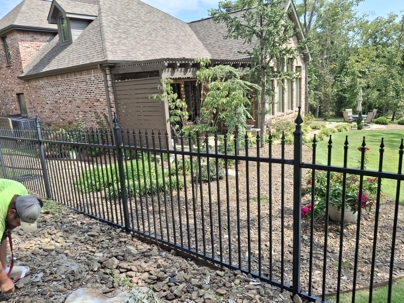
Wrought iron fencing has been a symbol of elegance and permanence for centuries. It appears along the fronts of classic homes, around properties where the owner wants a fence that says something about the standard they hold for their space, and in neighborhoods across Northwest Arkansas where curb appeal matters. When it is done right and maintained correctly, a wrought iron fence can last for generations and add significant value to your property for as long as it stands.
When it is done wrong or left unattended, the story changes quickly. Whether you are considering wrought iron fencing for a home in Bentonville, Fayetteville, Rogers, or Springdale, understanding what can go wrong and how to avoid those outcomes is what separates a fence investment that pays off for decades from one that becomes an expensive ongoing problem.
What Wrought Iron Fencing Actually Is and How It Differs From Steel
One of the most common sources of confusion in the ornamental fencing category is the distinction between wrought iron and steel. The terms are often used interchangeably, but they refer to different materials with different properties, and the difference matters when you are making a purchasing decision.
True wrought iron is an alloy of iron with a very low-carbon content that gives it a fibrous, workable structure. Historically, it was the material of choice for decorative fencing because it could be shaped into the elaborate scrollwork and ornamental details that define the style. Genuine wrought iron is rarely produced on a commercial scale today.
What is commonly sold as wrought iron fencing is often ornamental steel, either solid or tubular, fabricated to replicate the appearance of traditional wrought iron. Stand Strong Fencing of Northwest Arkansas offers both wrought iron and steel fencing as distinct options, and understanding the differences between them matters before you decide. Steel is more susceptible to rust than true wrought iron, and the protective coatings applied during manufacturing are the primary defense against corrosion. If those coatings are breached or degraded and not addressed, rust follows.
The Rust Problem: What Happens When Maintenance Is Neglected
Rust is the defining maintenance challenge of ornamental iron and steel fencing, and it is one of the most underestimated problems homeowners face. The process begins not when rust is visible on the surface but the moment a protective coating is scratched, chipped, or compromised anywhere on the fence.
Northwest Arkansas sees a real mix of conditions throughout the year, including summer humidity, ice storms in winter, and freeze-thaw cycles in the shoulder seasons. All of that puts ongoing stress on metal fencing coatings. The more variable the climate, the more critical it is to stay on top of maintenance before rust gets a foothold.
In the early stages, surface rust is a maintenance problem. It can be addressed through surface preparation, rust treatment, and recoating without significant structural impact. The mistake is treating it as cosmetic, deferring the repair, and allowing the progression to continue.
Once rust penetrates through the metal rather than just across the surface, the structural integrity of the fence begins to be affected. Advanced rust on posts is especially serious. A post can look completely fine above grade while being structurally compromised at the base if rust has taken hold at or below the soil line, where moisture exposure is most intense. Repairing damage at that stage is significantly more expensive than preventing it, and in many cases, full replacement is the only practical path forward.
Is Wrought Iron the Right Choice for Your Property?
Wrought iron is a strong fit for front yard and entrance applications where visual impact is the priority and the home's architectural style calls for something formal and distinctive. If you have driven through some of the older, established neighborhoods in Fayetteville or Rogers, you have seen wrought iron done right. It pairs naturally with masonry pillars, traditional home styles, and formal landscaping.
It is a weaker fit for full-privacy applications, properties with young children or pets where gaps between pickets are a concern, or homeowners looking for a maintenance-free solution. For those situations, other materials serve better.
If you want the ornamental look with less maintenance, aluminum fencing is worth considering. It closely replicates the wrought iron aesthetic using a material that will not rust and requires significantly less upkeep over time.
Schedule a Quote With Stand Strong Fencing of Northwest Arkansas
At Stand Strong Fencing of Northwest Arkansas, our team handles wrought iron and ornamental steel fence installation throughout Bentonville, Fayetteville, Rogers, Springdale, and the surrounding NWA communities. Every installation is backed by our lifetime workmanship warranty, so you can feel confident in the investment from day one.
If you are considering wrought iron fencing or are not sure which material is the right fit for your property, we are happy to help you think it through. Call us at (479) 480-6213 or schedule a quote online today.