


Dallas pool owners must balance safety, compliance, and design when choosing a fence. This guide explains which pool fence ideas align with local safety codes, reduce liability, and protect children and pets. You will learn approved materials, height rules, gate requirements, and common mistakes that cause inspection failures. If you want pool safety fencing that satisfies regulations without compromising curb appeal, this article breaks it down clearly for Dallas homes.
Which Pool Fence Ideas Work Best for Dallas Safety Codes?
Why Pool Fence Compliance Matters for Dallas Homes
Pool ownership in Dallas comes with responsibility. Beyond maintenance and aesthetics, property owners must follow strict safety rules designed to prevent accidents and legal exposure. Many homeowners invest in attractive fencing only to discover it does not pass inspection. This is why understanding pool fence ideas that meet Dallas safety codes is essential before installation.
This blog explains what works, what fails, and how to choose pool safety fencing that protects your family while staying aligned with city regulations. Whether you own a residential pool or manage a rental property, code compliant fencing is not optional. It is a requirement.
Understanding Pool Safety Regulations in Dallas
Pool safety rules in Dallas are enforced to reduce drowning risks, especially for children. The city mandates barriers that restrict unsupervised access to pools and spas. These rules apply to new construction, remodels, and in many cases, existing pools.
The City of Dallas building codes focus on height, spacing, gate function, and durability. Fences must create a continuous barrier around the pool area, separate from the home or yard fencing in many layouts. Understanding these fundamentals helps you evaluate which pool fence ideas are practical and compliant.
Minimum Height and Clearance Requirements
One of the first criteria inspectors check is fence height. In Dallas, pool fences generally must be at least four feet high. Any shorter fence increases the risk of children climbing over it. Clearance between the ground and the bottom of the fence is also regulated, usually limited to a few inches.
Gaps between vertical pickets are another common failure point. Openings that allow a child to squeeze through can result in failed inspections. When reviewing pool fence ideas that meet Dallas safety codes, always confirm spacing specifications before committing to a design.
Self Closing and Self Latching Gate Standards
Gates are often the weakest link in pool safety fencing. Dallas codes require gates to be self closing and self latching. This ensures the gate automatically shuts and locks after each use.
Latch placement matters as well. Latches must be positioned high enough so young children cannot reach them easily. Many decorative gate designs fail here, which is why function must guide aesthetics. Choosing a tested gate system helps prevent compliance issues later.
Popular Pool Fence Ideas That Pass Dallas Inspections
Ornamental Steel Pool Fencing
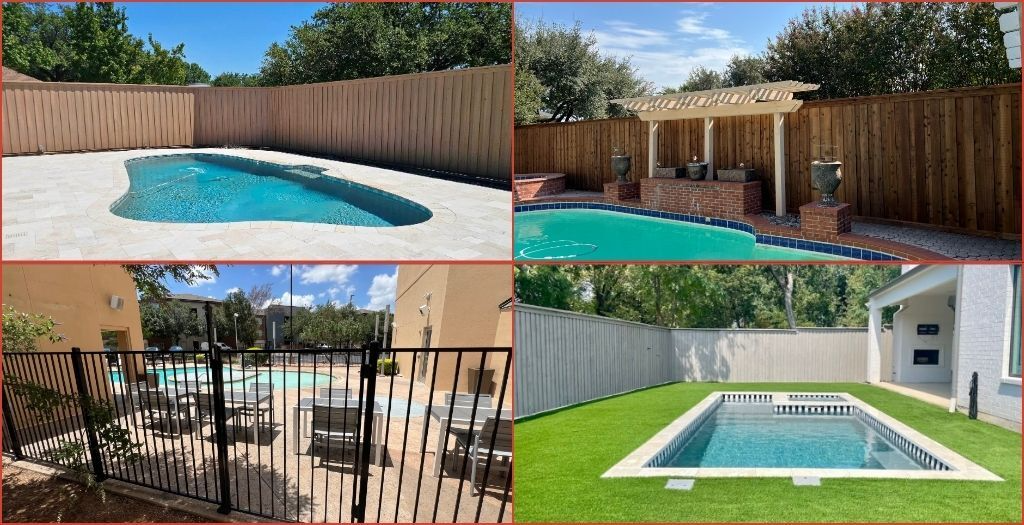
Ornamental steel remains one of the most reliable pool fence ideas for Dallas properties. It offers strength, controlled spacing, and long term durability. Inspectors favor this option because it is difficult to climb and resists weather related damage.
Steel fencing also blends well with modern and traditional home designs. It delivers a strong safety barrier without blocking visibility into the pool area.
Wood Pool Safety Fencing
Wood fencing is a widely used option for pool safety fencing when built to meet local height and spacing requirements. With proper construction, it can provide a solid barrier around the pool while blending naturally with residential landscapes in Dallas.
Homeowners often choose wood fencing for its flexibility in design and privacy. When paired with a compliant self closing, self latching gate, wood pool fences can meet inspection standards without complications.
Chain Link Pool Safety Fencing
Chain link fencing is a practical choice for pool safety applications. It can be installed to meet required height and visibility rules while maintaining clear sightlines around the pool area, which is often preferred for safety monitoring.
When properly tensioned and paired with a code compliant gate system, chain link pool fencing can pass inspection. Its straightforward installation and durability make it a common solution for residential and commercial properties.

Pool Fence Ideas That Often Fail Inspections
Some designs look appealing but do not meet safety standards. Horizontal rail fences are a common example. These designs can act like ladders, making them easier for children to climb.
Chain link fencing also raises concerns when spacing or height is incorrect. Temporary mesh fences may be allowed in limited situations but rarely satisfy permanent pool safety fencing requirements. Choosing style over compliance often leads to costly replacements.
Visibility and Supervision Considerations
Dallas inspectors consider visibility an important safety factor. Pool fences should allow adults to see into the pool area from the house or yard. Solid walls or opaque materials may limit supervision, increasing risk.
Many compliant pool fence ideas balance visibility and security. Vertical steel or aluminum pickets offer clear sightlines while maintaining a strong barrier.

Maintenance and Long Term Compliance
Meeting code at installation is only the first step. Pool safety fencing must remain functional over time. Loose latches, sagging gates, or damaged panels can put you out of compliance.
Dallas property owners should inspect fences regularly, especially after storms or heavy use. Proactive maintenance helps prevent violations and keeps your pool area secure year round.
Choosing the Right Fence for Your Property Type
Residential homes, rental properties, and multi family complexes may face different inspection scrutiny. Rental and commercial pools often undergo more frequent checks. This makes durable, low maintenance pool fence ideas a smarter choice.
Working with fencing contractors who are familiar with local codes reduces risk. They understand which materials, gate systems, and layouts consistently pass Dallas inspections.

Conclusion
Choosing the right pool fence in Dallas requires more than visual appeal. Height, spacing, gate mechanics, and visibility all play a role in meeting safety codes. Pool fence ideas that meet Dallas safety codes prioritize child safety, reduce liability, and deliver peace of mind. By selecting approved materials and professional installation, Dallas pool owners can protect their families and avoid costly compliance issues.
Frequently Asked Questions
1. What is the minimum fence height required for pools in Dallas?
Dallas pool fences generally must be at least four feet high. This height helps prevent children from climbing over the barrier. Shorter fences are a common reason for inspection failure. Always confirm height rules before finalizing your design.
2. Are self closing gates mandatory for pool fencing?
Yes, self closing and self latching gates are required. The gate must automatically close and latch every time it is opened. Manual gates without this function do not meet safety standards. Proper latch placement is also essential.
3. Can glass fencing meet Dallas pool safety codes?
Glass fencing can meet code if installed correctly. The glass must be tempered and securely mounted. Gates must still comply with self closing and latching rules. Poor installation often leads to non compliance.
4. Is horizontal fencing allowed around pools?
Horizontal fencing is usually discouraged for pool areas. The rails can be used as footholds by children. This design often fails safety inspections. Vertical picket designs are typically safer and more compliant.
5. Does pool fencing need to surround the entire pool?
In most cases, yes. The fence must create a continuous barrier around the pool. Open access points increase safety risks and lead to violations. Partial fencing is rarely approved.
6. How often should pool fences be inspected for compliance?
Regular checks are recommended, especially after storms or heavy use. Gates and latches should be tested frequently. Ongoing maintenance helps ensure continued compliance. Neglect can result in violations.
7. Are temporary pool fences allowed in Dallas?
Temporary fences may be allowed in limited situations, such as during construction. They usually do not meet long term safety requirements. Permanent pool safety fencing is expected for ongoing use. Always verify approval before relying on a temporary option.
8. What happens if a pool fence does not meet Dallas codes?
Non compliant fencing can result in failed inspections and required corrections. Property owners may face fines or delays in pool use approval. Replacing a fence after installation is costly. Choosing compliant pool fence ideas from the start avoids these issues.